

Amy Boulton is an artist, researcher and XR creative director based in Stockholm. Her work spans the fields of new media art, public art and immersive performance. Recurring themes are the identity of places and our relationship with technology. She initiated and co-directed the project CULT of the Cyberpunks: Exploring drag performance in XR.
Emma Bexell is an award-winning theatre maker based in Malmö who began her career in Stockholm’s independent theatre scene in the early 2010s. She has since become a key experimental voice in Swedish performing arts, continuing her long-standing exploration of the borderland between art and social engagement, with a particular focus on digital life and virtual worlds.
We are two artists working with performers and XR technologies, with backgrounds in theatre and fine arts. We recently worked on a project together in collaboration with Status Queer’s drag performance collective CULT in Gothenburg, Sweden, exploring how XR could bring their work to different audiences than their live shows and how it could offer new possibilities for them as a medium of creative expression.
In this piece we explore some of the practical and conceptual tensions we experienced while working on this project. From the problem of categorisation, balancing order and chaos, competing in the attention economy, co-option vs subversion of big tech apparatus, we attempt to navigate these tensions and orient ourselves in an unstable shifting landscape, guided only by our prior experience and inner compasses.
Harvesting knowledge from this collective, creative process that could be forwarded to other thinkers and makers has left us with a basket full of tensions. The technologies we’ve been working with carry narrative contradictions between on the one hand access, liberation and community and on the other exploitation, tech overlords and enshittification. We could have been sharing workflows and failures from our project, but it seemed more important to highlight some of the contradictions inherent in the so-called “access illusion” of XR tools.
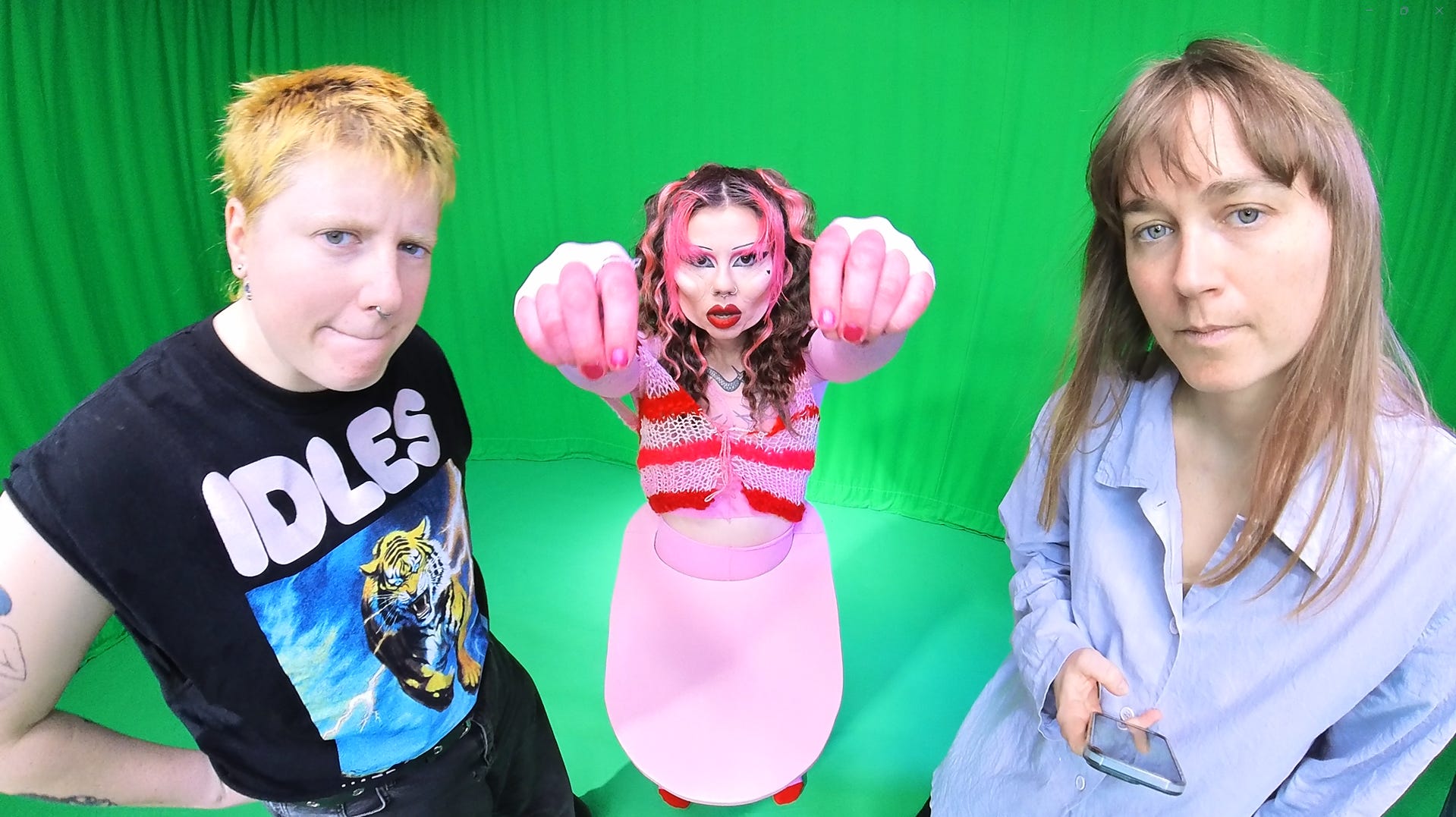
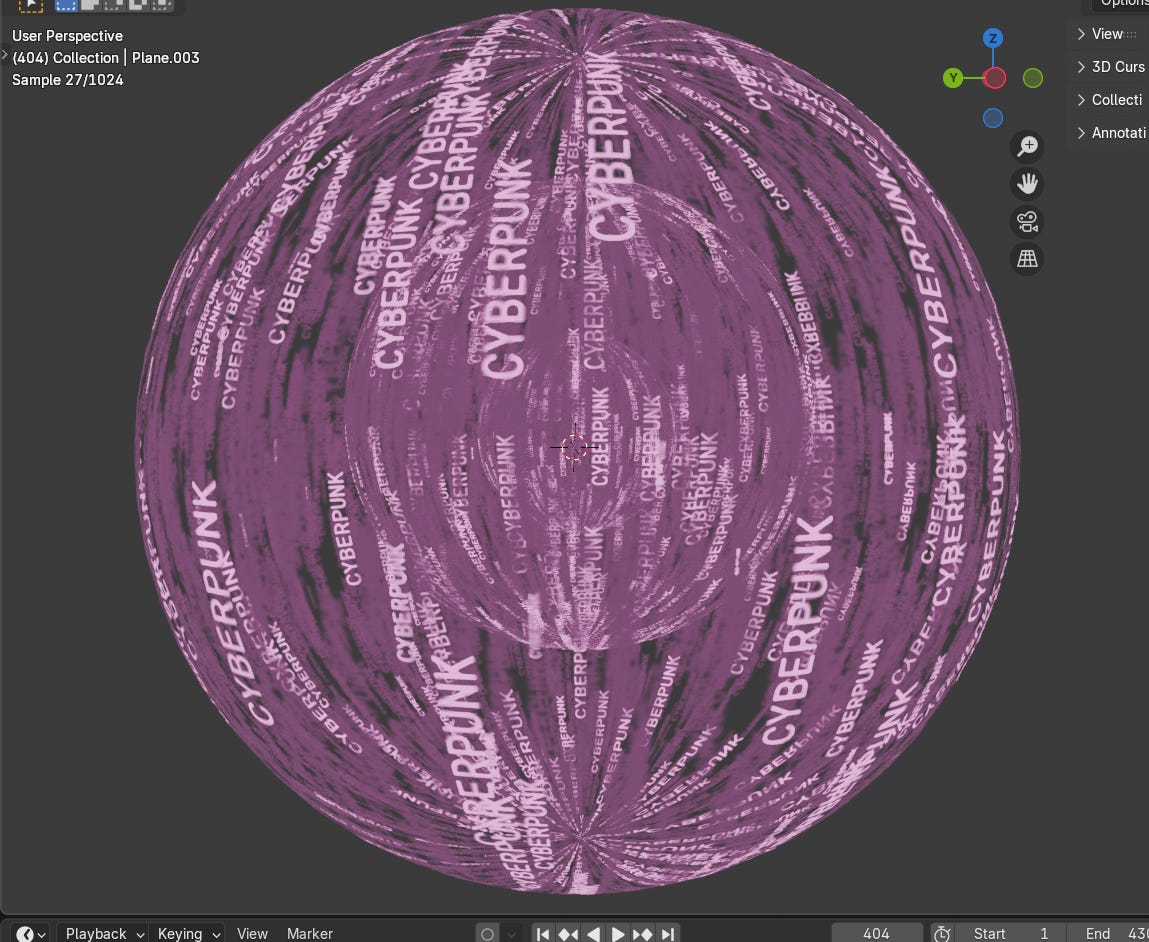
The knowledge the drag collective and us as XR artists and writers of this piece can offer is specific to these particular cultural expressions at this particular time and place. So why extrapolate? We have not thought about this work primarily as a production of technical know-how (that is so soon outdated) or as an “innovation” of tech or drag. Rather it has been a probe, a weed, a (fabulous) rock thrown into a muddy pond. Even the search for metaphors is riddled with traps. But both XR and drag performance rely on illusions and oscillations. And so, if we can offer any actionable results from our work it is in a mapping of those conflicts and parallels, along with an artistic work that attempts to hold them while entertaining you at the same time.
The tension between categorisation and innovation
Before any work can be created comes the work of creating the right conditions and resources. XR and drag performance have a shared problem of being perceived as on the fringes of other, larger mediums (such as the film, art, and tech industries) on the one hand, and just nightlife or entertainment on the other, which is seen as commercial and low-culture. Cultural practices of developing and sharing avant-garde performance art and grassroots community building are often overlooked. More traditional mediums for live performance like theatre and opera on the other hand enjoy a much more respected and protected position in Swedish culture. And tech is pronounced as “innovative” only when it’s also making a profit.
This fringe position means both XR and drag performance lack established institutional structures to receive cultural funding. In our case, we secured innovation support from Film&TV Lindholmen, and got to use a studio for free at Gothenburg Film Studios. However none of us actually work with Film & TV in the traditional sense. We are interested in cross-disciplinary, or rather, trans-disciplinary practice: when working with and between mediums creates another, hybrid working practice that borrows and steals whatever techniques and strategies feel relevant and natural to the collaborative creative practice.
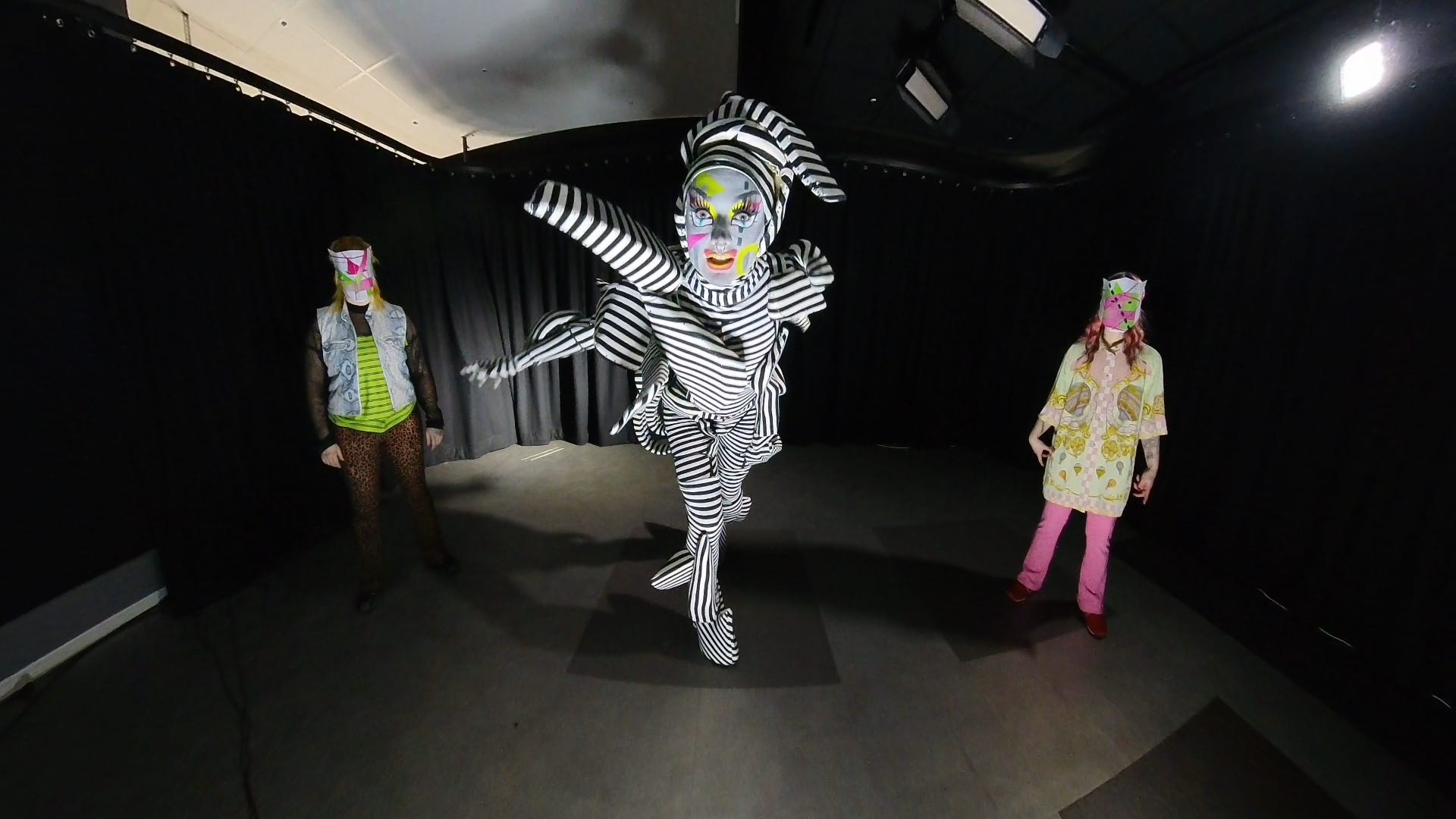
Directing a project like this demands mediation: to be the bridge that connects and translates across disciplinary languages and understandings of “quality”, defining what criteria we use for artistic and technical merit. As a freelance artist with experience of how different institutions operate, it’s possible to create a structure that the different stakeholders can understand in order to give alternative possibilities to this drag community, whose practice falls between the cracks of commercial entertainment and artistic funding structures. On the one hand we’re carving out a space for queer, fringe activity in commercial infrastructures, too large and opaque for us to democratically influence. On the other hand, drag is frequently categorised as “nightlife” and viewed as commercial entertainment in the public funding system, therefore in no need of economic support. There is a tension between the commercial and the non-profit, the dominant and the fringe, the traditional and the innovative, but the categories are cut differently depending on who you’re talking to.
Speaking of categories, there is also an awkward tension in being above thirty in a space where there are a lot of opportunities and resources for younger (below thirty) artists. You need the experience, the practice, but in order to have gained that you need to have had time to develop, during which you happen to have gotten older.
The tension between order and chaos
For a project like this, we can not have complete chaos, but also not complete order. We need to take risks but risks operate as chaotic agents, not orderly ones. However we do need some structures to ensure safety: A Space (that we can mess up), Time (that we can flex depending on new ideas and needs and the unforeseen), Tech infrastructure (that we can treat as our own for a while), Money.
What are the aesthetics of such a project? For us, production value is only semi-important: the core “quality” we aim for is how well we can articulate the performer’s specific message through what we agree are the most ‘appropriate’ XR tech stacks and workflows. The old challenge of creating a harmony of form and content. We tried to meet them where they’re at in terms of giving them an understanding of these XR techniques during the intro and prototyping weeks. Some already work independently with digital media and have many transferable skills from 2D to 3D, while others felt a resistance and wanted to do something as analogue as possible.
To facilitate their thinking around how to create a performance specifically for an XR medium rather than to simply remediate a live stage performance, we used Stanford University’s Virtual Human Interaction Lab’s DICE framework (2024). This encourages taking advantage of the possibilities afforded by digital immersive mediums- to do it in XR when doing it on a live stage would be too:
Dangerous (e.g. fire)
Impossible (physically)
Counter-productive (if doing it “for real” has consequences that don’t align with the original intention)
Expensive (in terms of production value, e.g. to create a scene)
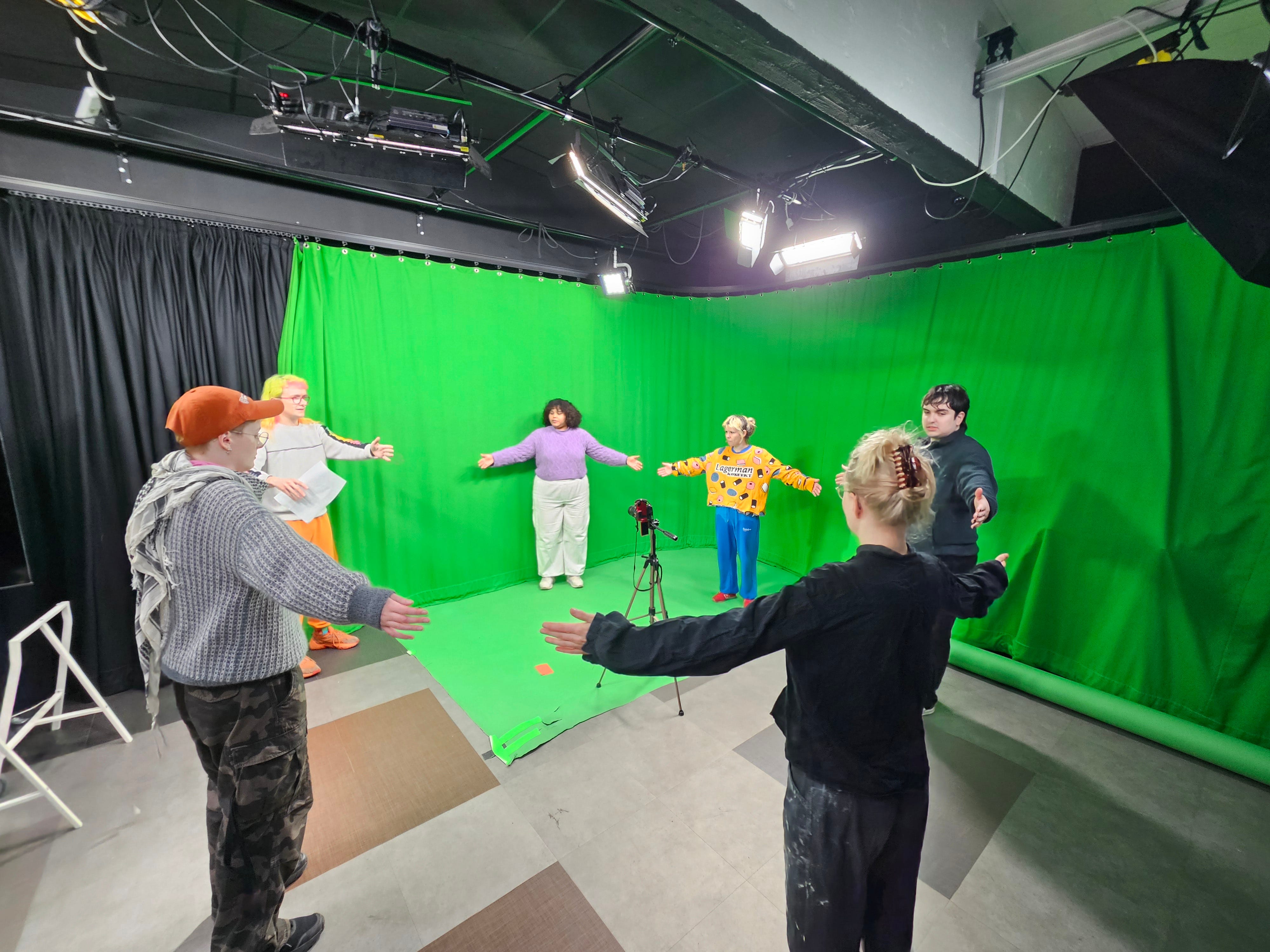
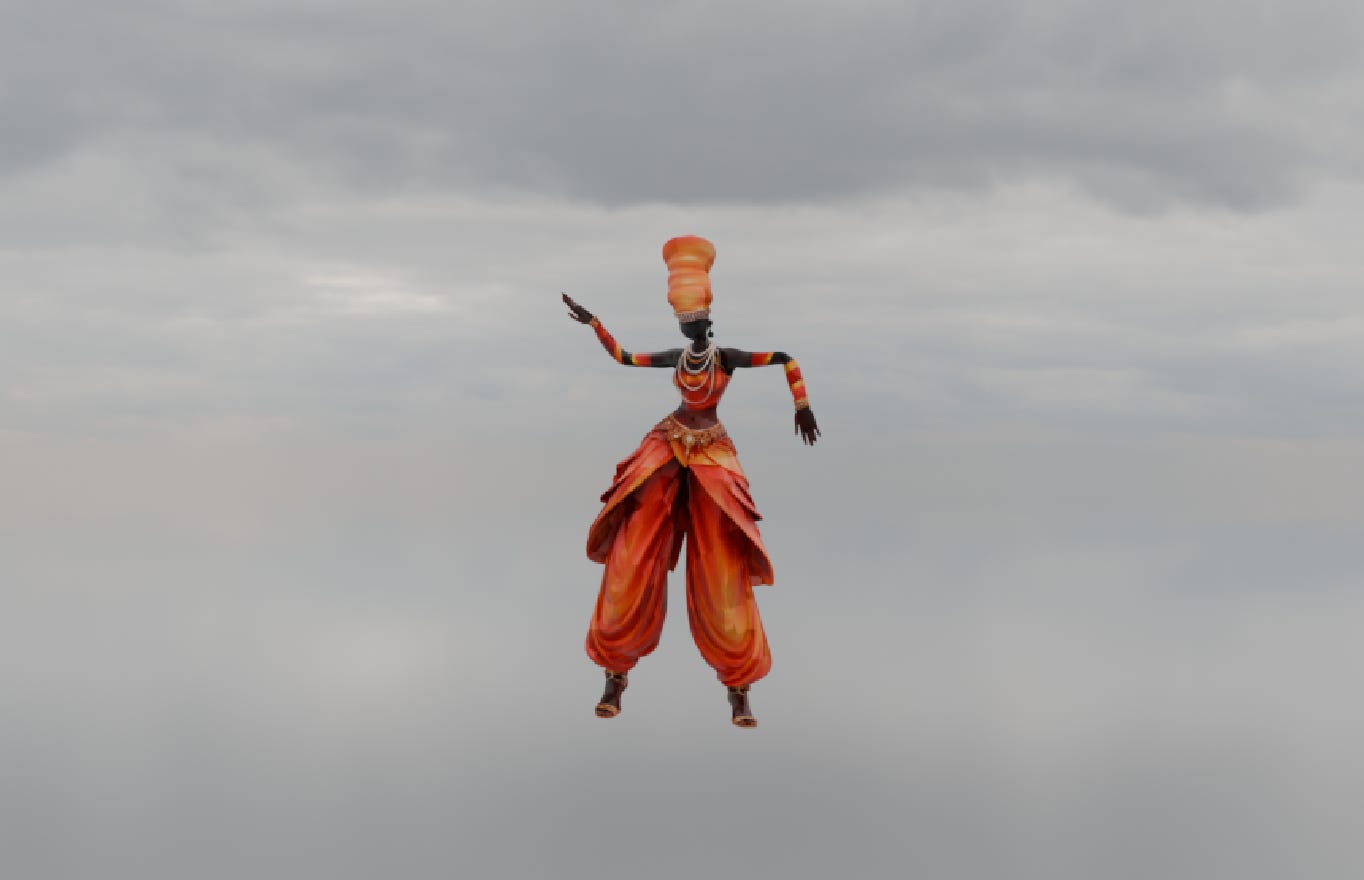
We asked them to consider the body of the viewer in their experiences - should they stand, sit, dance? In this way, we tried to provide an open and playful frame for something unknown to emerge from. There were however many moments of compromise to navigate through and conflicting choices to make during the process of creating this series of performances. We used AI enabled tools for some 3D modelling and motion capture from video source, which provided a resource-efficient shortcut when we have a team with limited time, expertise and budget. But this compromise came with the constraint of flexibility - for example, Yoruba goddesses modelled by an AI using image prompts worked fantastically until we realised there were no legs under the dresses - then we had to remodel with flowy trousers instead to be able to animate them.
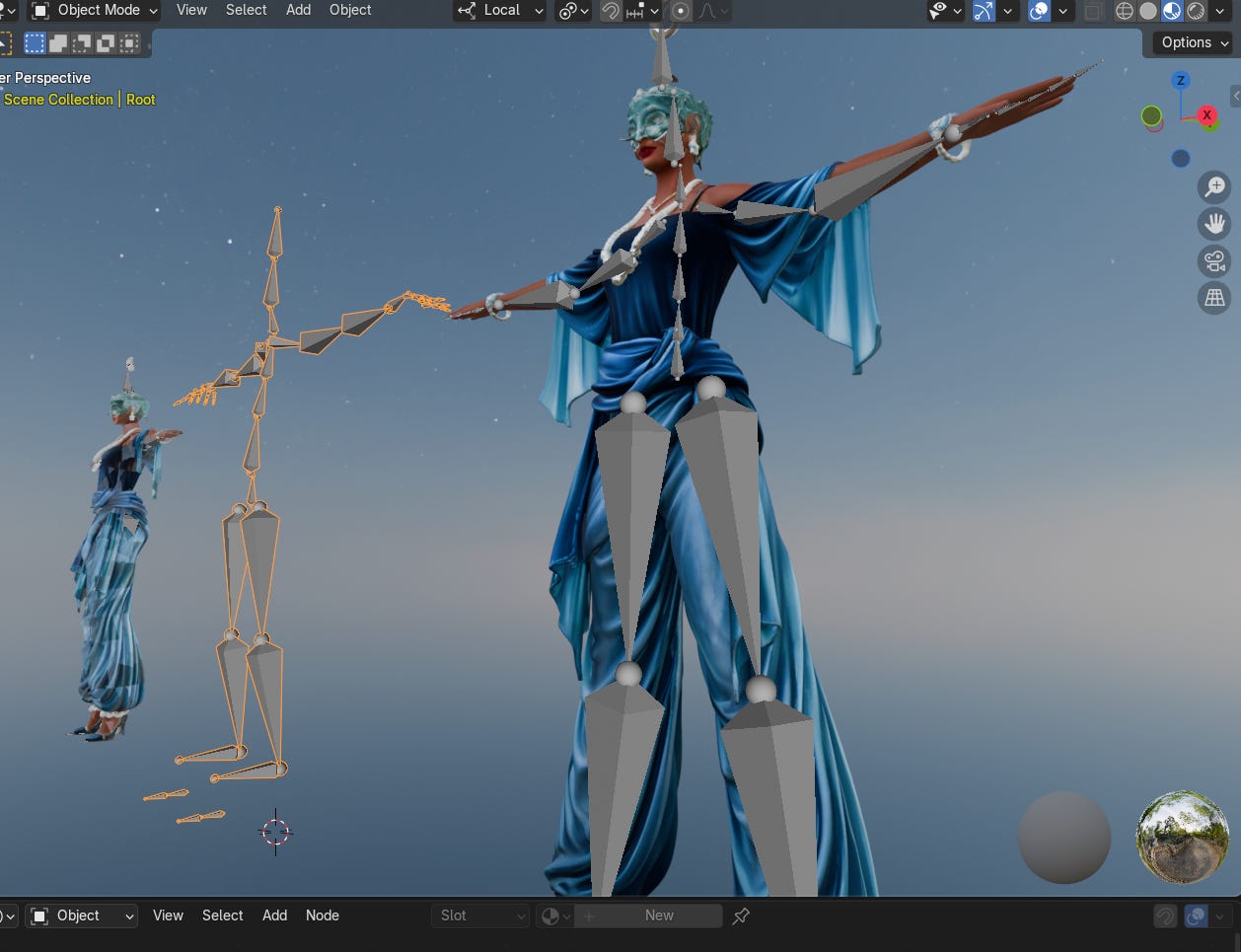
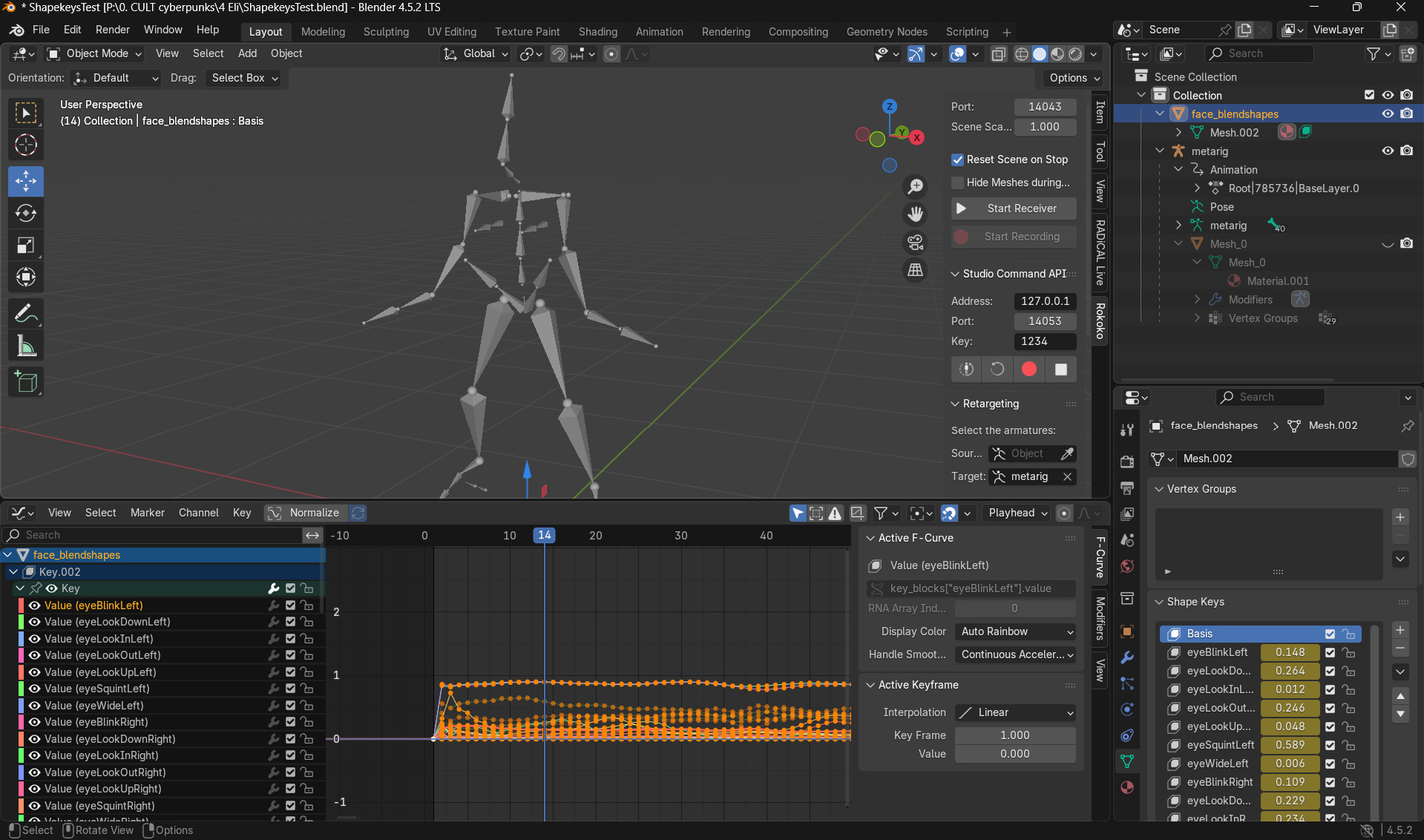
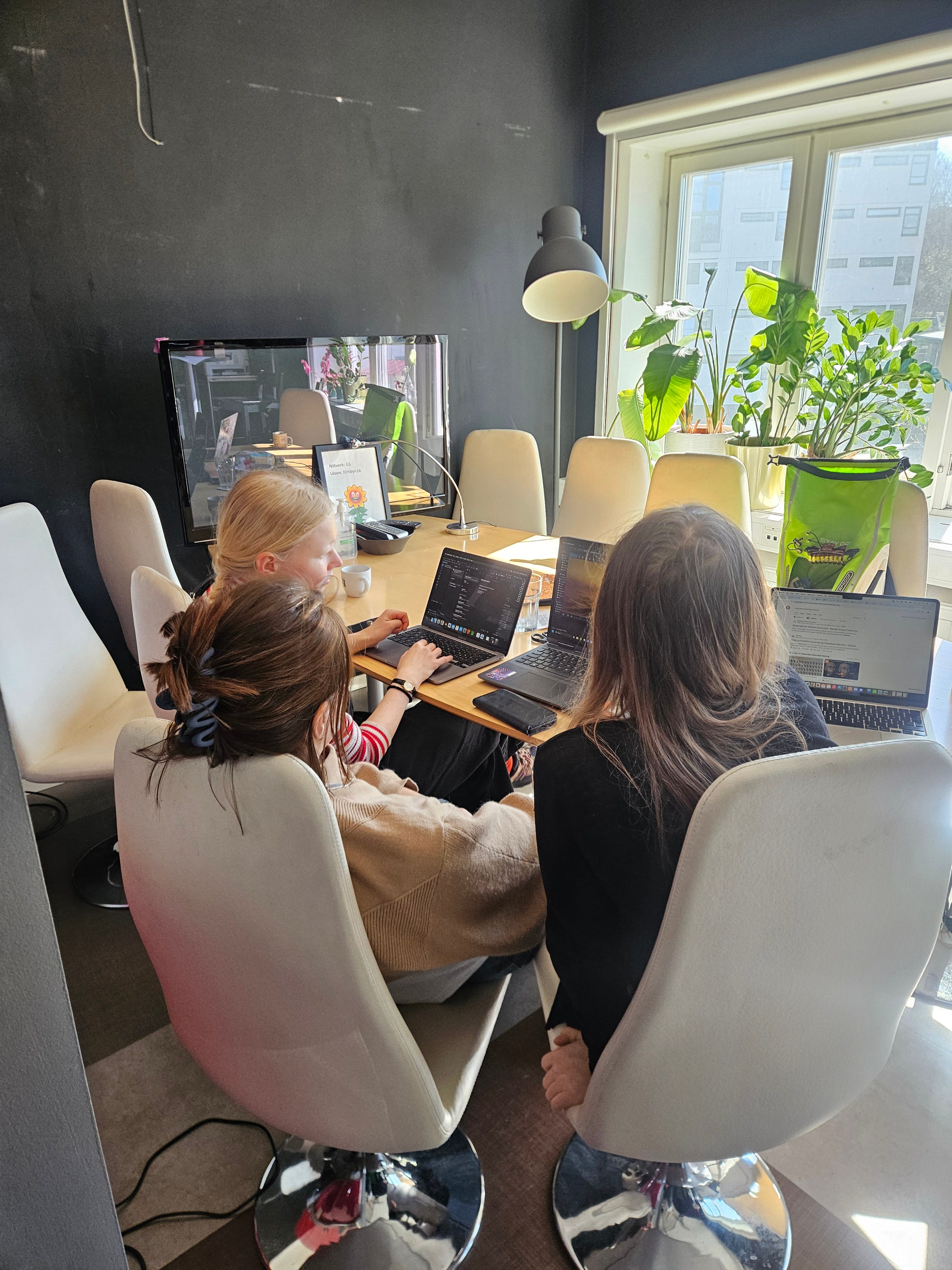
We also needed to simplify the mesh, manually cut the hair and other appendages away from the body where it shouldn’t have been attached, retarget the armature (skeleton) so that we could apply our custom motion-capture animations, and weight paint the models so that the animation of the joints affects the mesh (skin and clothes) in the correct way. What we thought would be a shortcut turned out to be quite convoluted. But we did make an interesting discovery along the way: that the particular AI mocap tool we used was also capturing facial animations, and so it was possible to record a lip-sync animation alongside a dance (a classic in drag performance). This required a whole different type of animation (shapekeys) which we as XR generalists were unfamiliar with. We couldn’t promise much but we tried our best. Desiring to be in the tension between order and chaos means risking chaos and risking order. We do risk assessments all the time, like “will trying to learn this new type of animation risk us not being finished on time?”, but letting in the chaos of introducing a new tool late in the process brought a lot of new knowledge. Not having the pressure of presenting a polished product at the end of the day was key in daring to take the risk.
The tension between generalists and specialists, punk rockers and sleek tech bros
Being a generalist demands that you’re able to operate at least on a surface level in so many tasks, which is a skill in itself as you need to see the wider picture and navigate through a complex breadth of technical and conceptual possibilities. It can feel like there is a privilege in being a specialist in comparison - to only have to concern yourself with a narrow field of possibilities and have the time and mental focus to get deeper into them. What is slightly amusing to us as artists working with XR technologies is that we are both seen as punk rockers within the tech industry when we throw rules and norms out the window, while at the same time we’re seen as sleek tech enthusiasts by our peers from the theatre and contemporary art circles that we also occupy.
The attention tension
Apart from the funding, what has made this project possible is the implicit trust gained through longstanding friendships and collegial relationships, and through associations with locally known and respected organisations. In this project we were able to tap into an existing, established network (via Status Queer in Gothenburg Sweden) to help them cater to even more people in their community. This includes queer people who, for varying reasons, don’t make it to their live-in person events in the city: maybe because it’s too far to travel if they live in the surrounding rural Västra Götaland, they might not dare to show up in person to such events out of fear of not being “queer enough” or of coming out as queer before they feel ready to. Others just find their live drag shows far too overstimulating because of the bright lights and loud music.
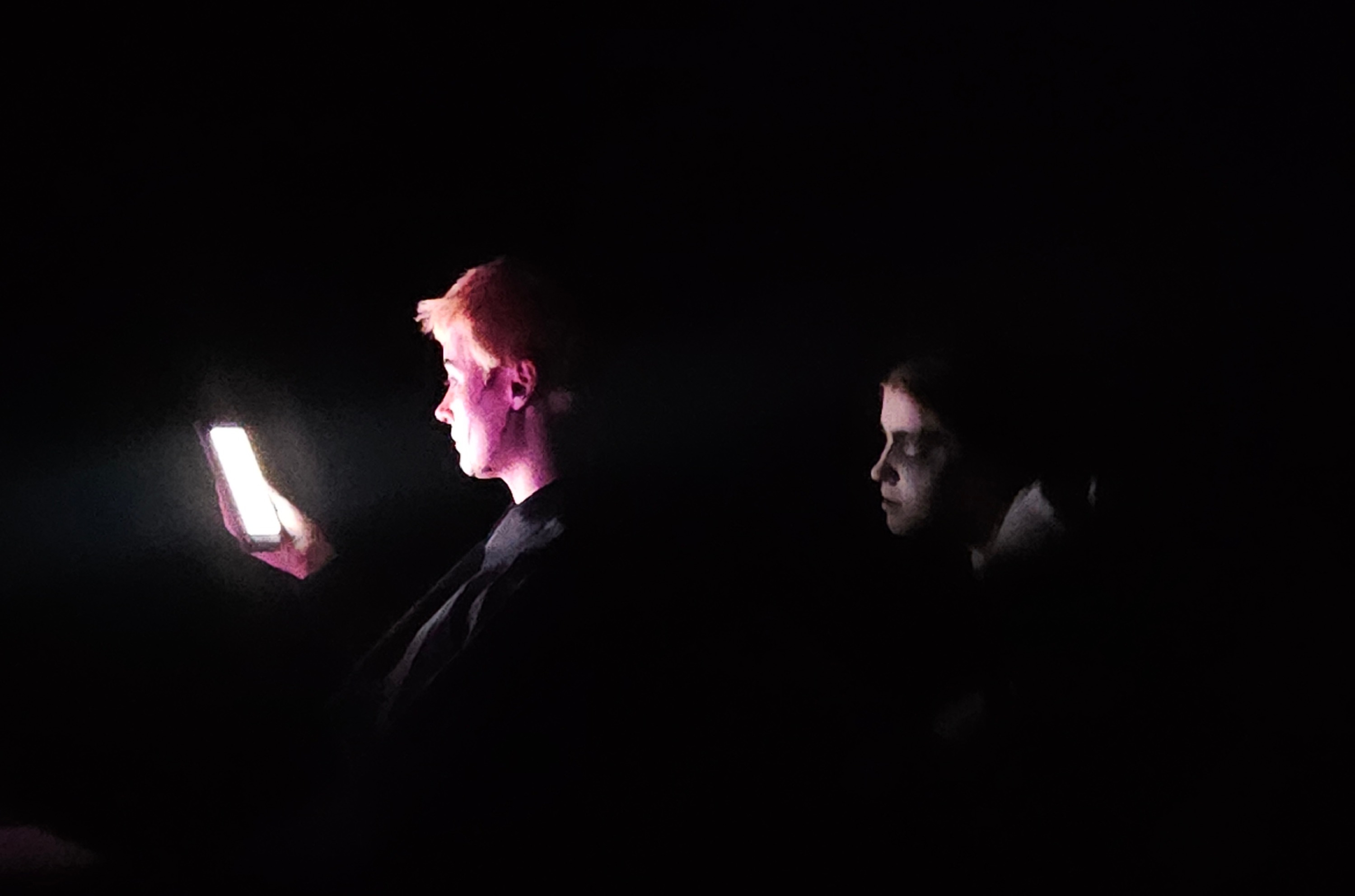
This pre-existing community helps us immensely with the issue of reaching an audience and choosing a platform to share this project, as we currently lack established XR distribution models for artistic works. In Summer 2026 we released this “XR Drag Show” as a YouTube playlist of 360 videos, with each performance working in a sequence with the others while still functioning as a standalone work, like individual music videos in an album release. YouTube is the largest video streaming platform in the world, but by presenting it on YouTube, people might click away. Keeping the attention becomes crucial. When we show in a VR headset or at a stage, we have more commitment from the audience built into the experience’s physical “platform”. There is a tension between the work we want to show and the most accessible way to show it being a platform that is pulling the attention away from what we want to show. We have on the one hand easy access to a place where we can distribute for our audiences but on the other hand that same place is working against the focused experience we want to offer. It’s a focus-access illusion, an attention illusion that makes us ask not just “who is this for?” but also “what is the materiality of that somebody’s so-called immersion?”
Subversion vs co-option, or the tension between pleasure and harm
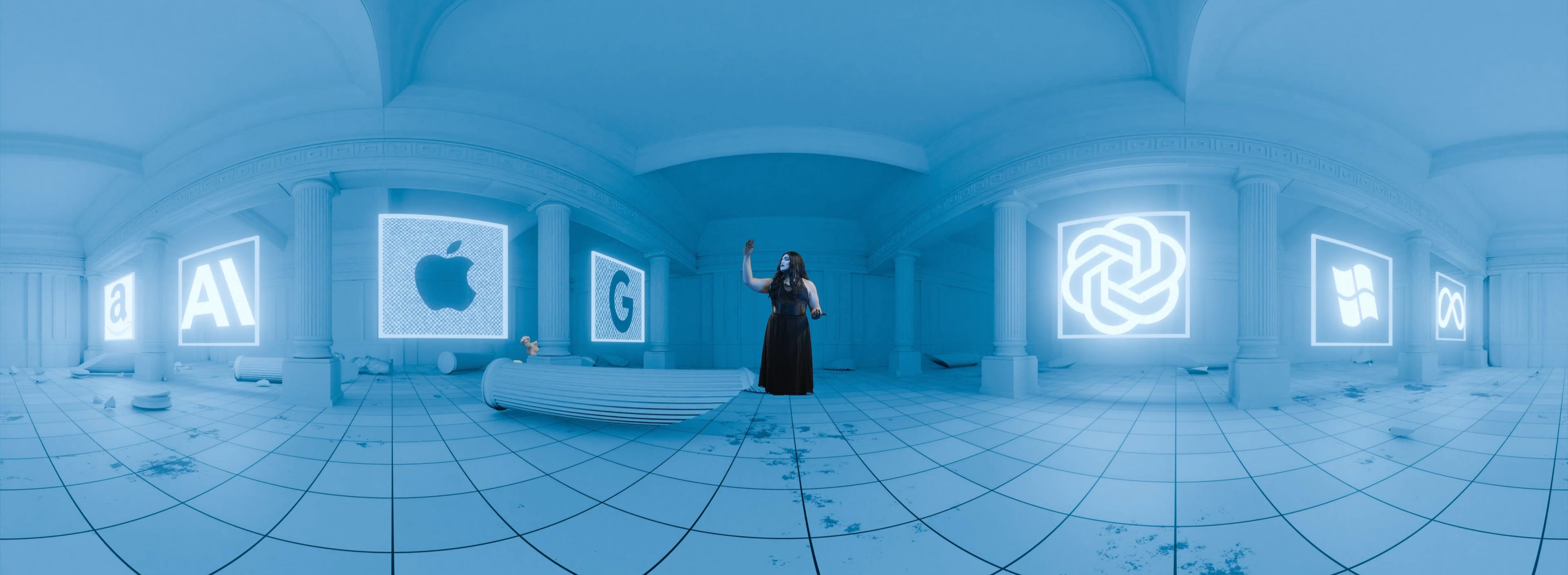
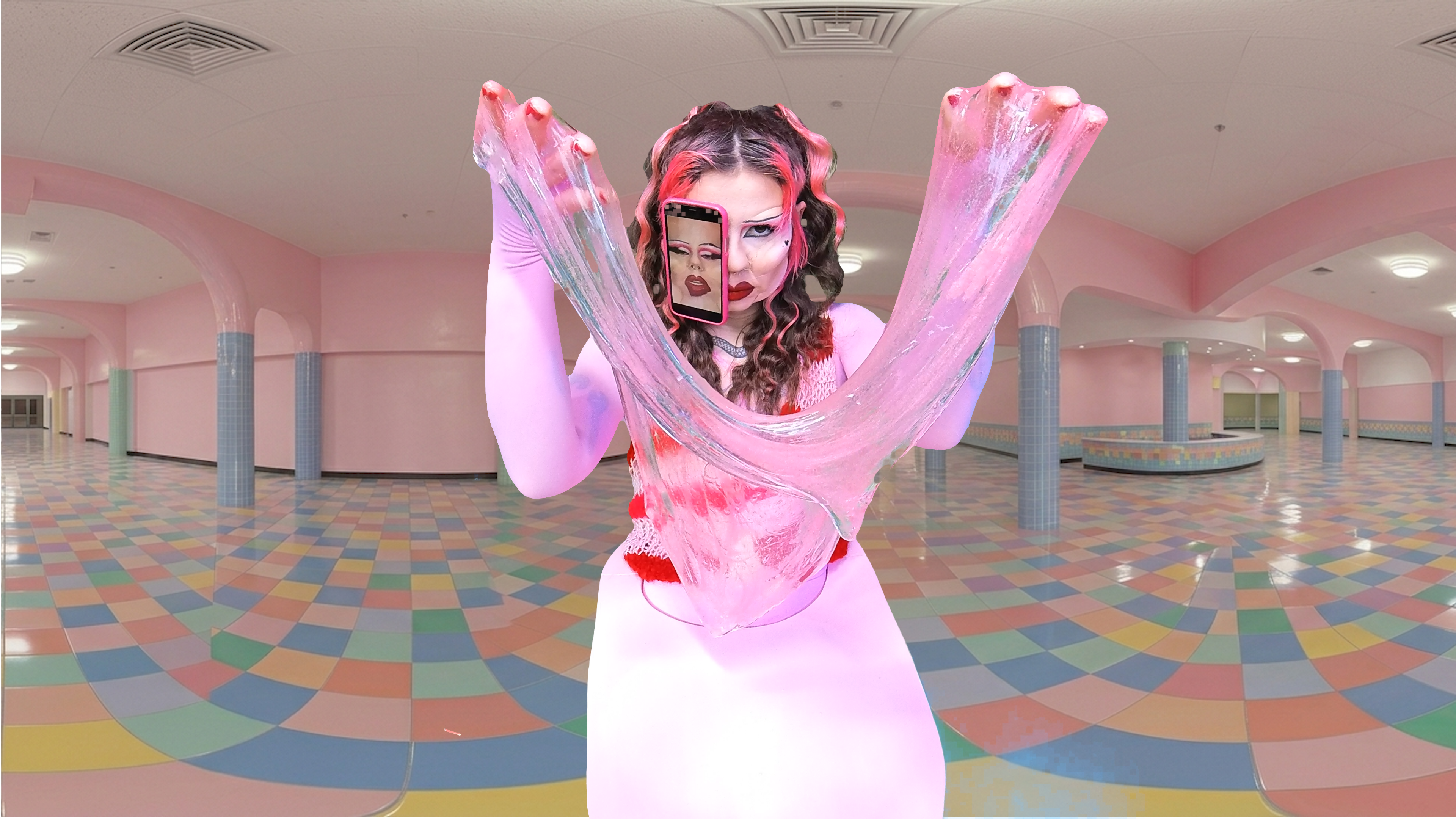
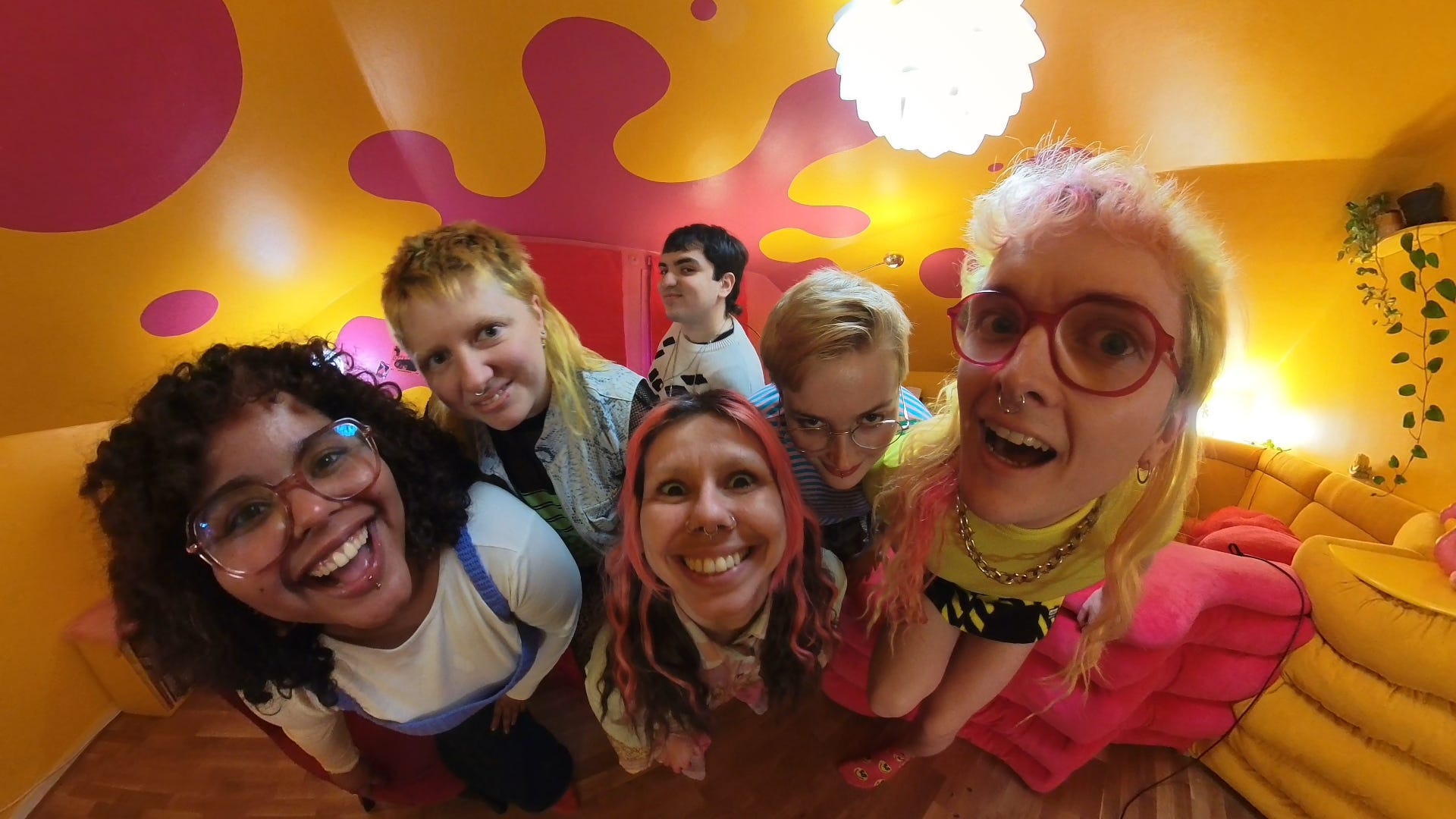
Status Queer’s CULT drag shows sew together “comedy with dance, lip sync, live singing, parody, caricature and kink to address a theme. We use these themes to probe issues that are important to us and our community.“(2026). The theme for our collaboration was “CULT of the Cyberpunks”. On the one hand a celebration of a science fiction genre that already holds the tension between high tech and societal collapse, and on the other hand a critique of the very tools they were exploring in the process. The works we prototyped with the performers ranged from a slime ASMR revelry number, computer vision dazzle costumes and awakening of ancient gods using motion capture to doom scroll horror. The stated artistic goal was to recalibrate: not to “log out, touch grass” but to log out, reimagine, then dial into a different, consciously chosen relationship to a technological future that actually works for us.
Since subversion is already a foundational aspect of drag, there’s a built in questioning of power structures that comes with it. As freelance artists and XR-enthusiasts, a lingering tension we hold is this question of “am I instrumentalising this situation?” (even if we also identify as queer). There is an ambivalence between appropriation as “good” (subversion, détournement, “staying with the trouble”) vs appropriation as “bad” (getting surface level cultural street cred as artists working with a marginalised/activist community, then that collaboration gets discarded after the project funding ends). We don’t have the ambition to scale this project because we don’t have the means to - as with so many art projects, we set out on this one-off journey as an independent raft on a commercial ocean. The community of the project is transient but it contributes to something longer-lasting, even if the impact of this is difficult to clearly articulate or measure.
One of us (Emma) worked on a similar project in spring 2024, where two drag artists were invited to explore virtual reality and live motion capture as tools for their practices. When asked to give a lecture about it for a group of students at a workshop organized after, one of the participating drag artists, Beatrice Thomas aka Black Benatar was hammering the message into the students that “VR needs drag artists!”. After all, who is more expert in the joyful play between body and costume, pride and prejudice than a drag artist? Who is better skilled at exploring and criticizing the stated potential of full body virtual avatars if not a member of a queer cult?

At least if you’re interested in making a virtual environment that’s fun/good/accessible for everyone. Meta’s CEO Mark Zuckerberg, after making unprecedented investments in the development of virtual reality, projected his “metaverse” to “enable better social experiences than anything that exists today” (“Founder’s Letter 2021”). One wonders what quality in a social experience means to one of the richest men on the planet. Once artificial intelligence technology boomed Meta made a U-turn and shoved over most of their efforts on that instead. Turns out building a better life for people did not matter as much as the balance sheet. A tension we hold in this process is between working with a technology that uses social value as bait for investors and actually adding social value to, for example, queers in rural Sweden.
We asked for the performers’ feedback on their experiences of the project through an online form with some open ended questions. One response stated that
“the vibe in parts of the [queer] community is that all tech is capitalist, and I feel like parts of the queer community [are] growing more and more averse to technology, [because of] being anti-capitalist and quite aggressively anti AI. Which I’m not invalidating, I just feel like it can lead to longing too much for the past and inflate a dystopian view of the future and present in a non helpful way? I feel like drag xr or fun queer technology could help counter balance the growing resentment and technophobia in the community yk.”
The same respondent concluded that “I don’t wanna be a capitalist, but I also wanna have a joyful and fun time with technology yk?” Which is a balance we as the project facilitators also struggle to strike.
Another performer’s response to the question “why does XR need drag artists?” was “To claim the space for queer art and free expression. It’s also good for us to apply a critical perspective into the use of this and any technology bearing in mind the social/ecological/political consequences. It’s important to remember the reality that came before and is running parallel to XR.” that is, to not get caught up in the hype around this or any other emerging technology. To be conscious that it’s part of a long continuum in which artists, activists and other civic society groups such as the open-source movement carve out a space of autonomy and critical distance from the sleek futuristic visions that big tech attempts to sell us on.
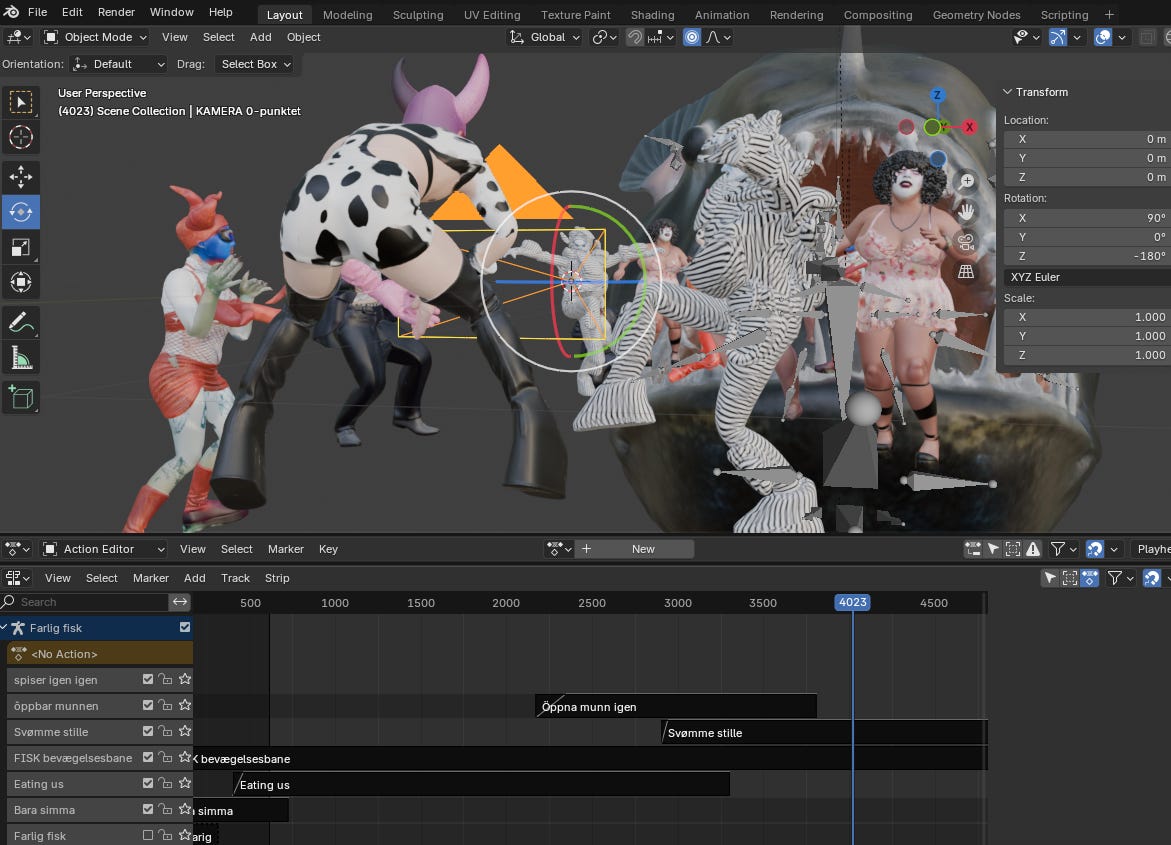
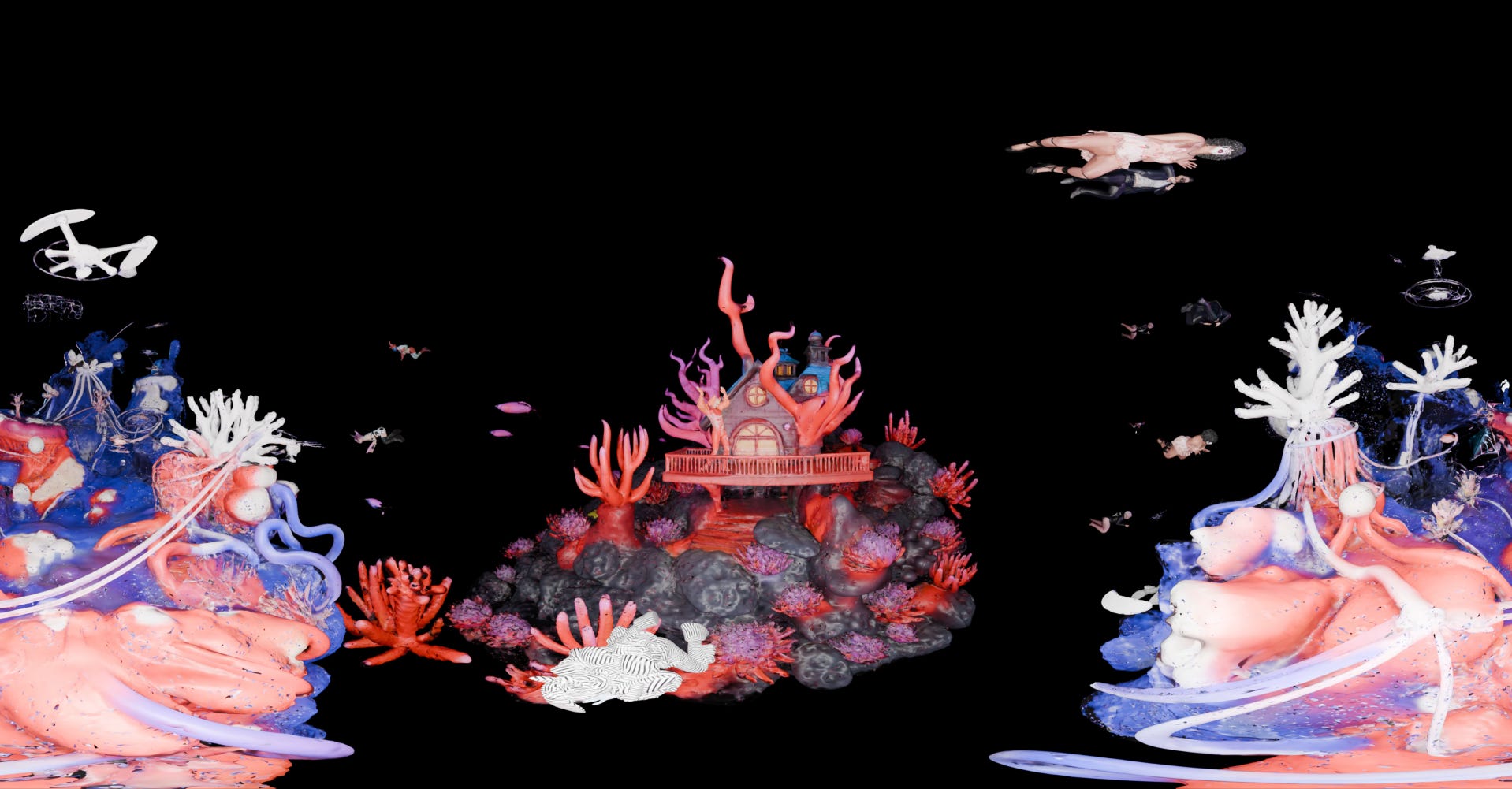
In Touching Feeling (2003), Eve Sedgwick critiques what she calls the dominant mode of academic critique: “paranoid reading”, characterized by the assumption that surface meaning conceals a sinister structure beneath, as well as an assumption that exposure equals critique. That unveiling ideology is itself politically sufficient. She contrasts this with reparative reading: a more generous, pleasure-affirming mode that asks what texts or objects do for their audiences, not just what they do to them. We could see this in Goss Ness’ work in the project, a 360 CGI deep-sea environment inhabited by dancing queer creatures lip-syncing to Diana Ross’ 80’s hit “It’s my house, and I live here”. The deep sea is usually seen as cold, dark and hostile, but here it’s transformed into a refuge from the surface-level world, an oasis of queer joy and hospitality. We also saw this in Poupettes’s work, which was a joyful reimagining of femininity inspired by afro-futurism. The work features descriptions and CGI renderings of dancing Yoruba goddesses, brought from West Africa to Brazil over the course of transatlantic slave trade.
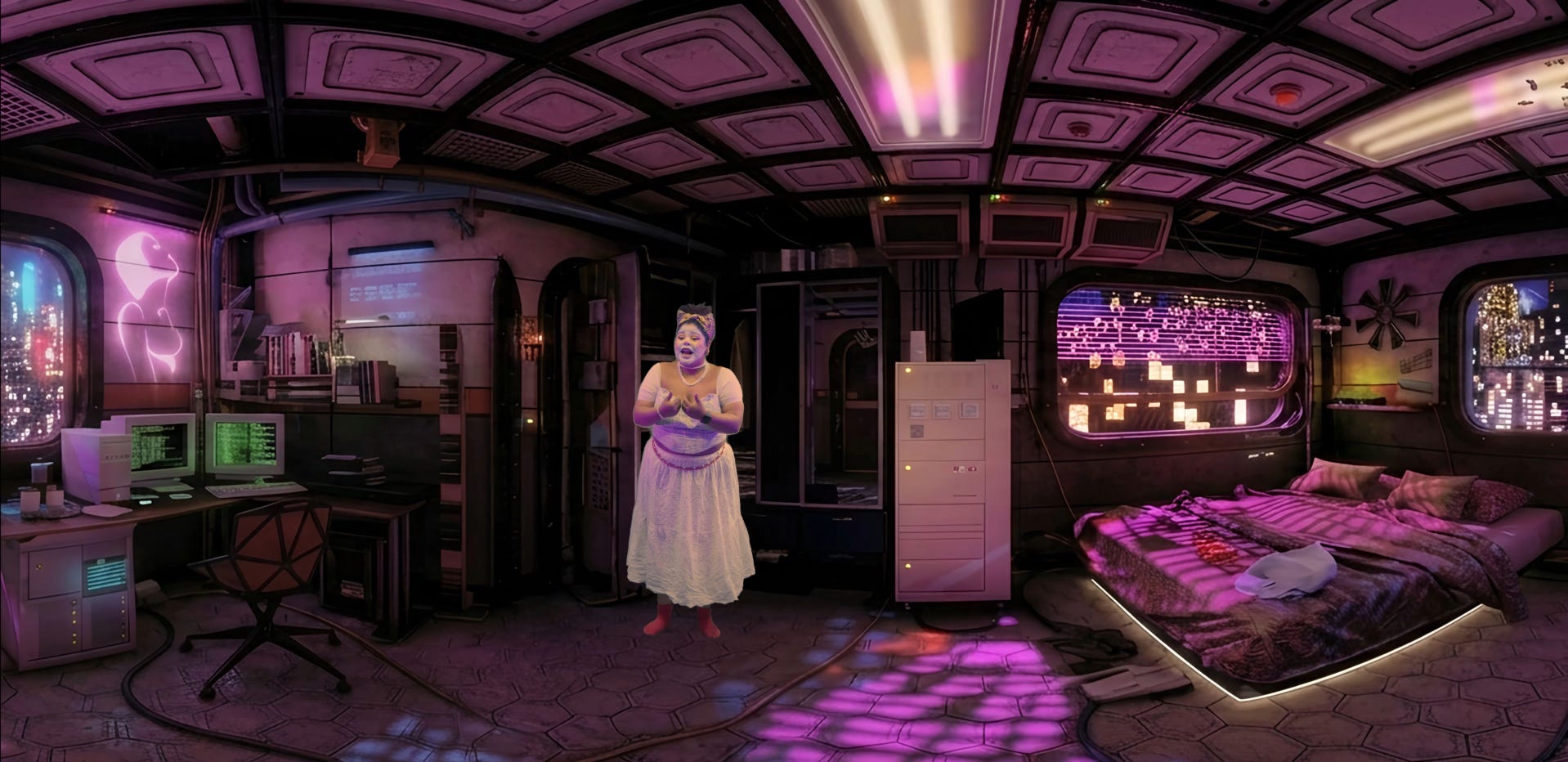
What happens when the body that has been policed, pathologized, and made spectacular against its will becomes the site of its own radical joy? This is not an abstract question but the material of every drag performance.
adrienne maree brown’s Pleasure Activism offers a framework for understanding why this matters beyond the stage. Drawing on Black feminist thought, science fiction, and decades of community organizing, brown argues that joy is not incidental to liberation but precisely liberation in practice. Drag in XR sits at the intersection of two traditions that brown’s work illuminates: the long history of queer and trans communities preserving dignity and cultural identity through performance in the face of systematic dehumanization, and the emergent question of what embodied joy looks like when the body itself becomes technologically malleable. Taking to the virtual stage is not an escape from politics. It is an arena where the question brown asks becomes newly urgent: whose pleasure has been stolen, and what does it mean to take it back?
The VR headsets we used in this project are built by Meta, whose VR infrastructure is surveillant by design. Biometric, behavioural and spatial data is collected with unprecedented granularity. Zuckerberg’s political alignment post-2024 makes “technofascist” a pretty defensible description of the corporation. The infrastructure is simultaneously without doubt inhabited by queer culture. LGBTQ+ communities as well as queer erotics have proliferated in VR spaces, often in creative friction with the platform rules. A paranoid reading of this situation would say: queer VR use is always-already recuperated; the platform extracts value from queer sociality while feeding data to surveillance capitalism and right-wing infrastructure. This reading is not wrong, but Sedgwick would ask: what does it cost us? What does it foreclose? Can we hold both the harm and what is being built, felt or sustained? What needs are being met? What forms of embodiment, community, or intimacy are genuinely enabled? Especially for trans or disabled users for whom physical community is costly or dangerous.
Queer communities have always built culture inside hostile infrastructure. The question is not only “is this complicit?” but “what is being made here, and at what cost, and by whom?”. It’s necessary to both keep a sensible worry (paranoia?) about systems that aren’t good for us, to correctly name structural violence, while at the same time keeping a reparative stance without risking naive platform boosterism. It is necessary to account for queer survival and creativity within these structures, so that we don’t end up having no account of it beyond our subjugation. Using big corp technology, we’re holding the tension between “access disillusion” (knowing that we can’t affect the structures we’re depending on and actually doing work within these structures) and the kind of “smuggling” work of using them for social good and artistic experimentation.
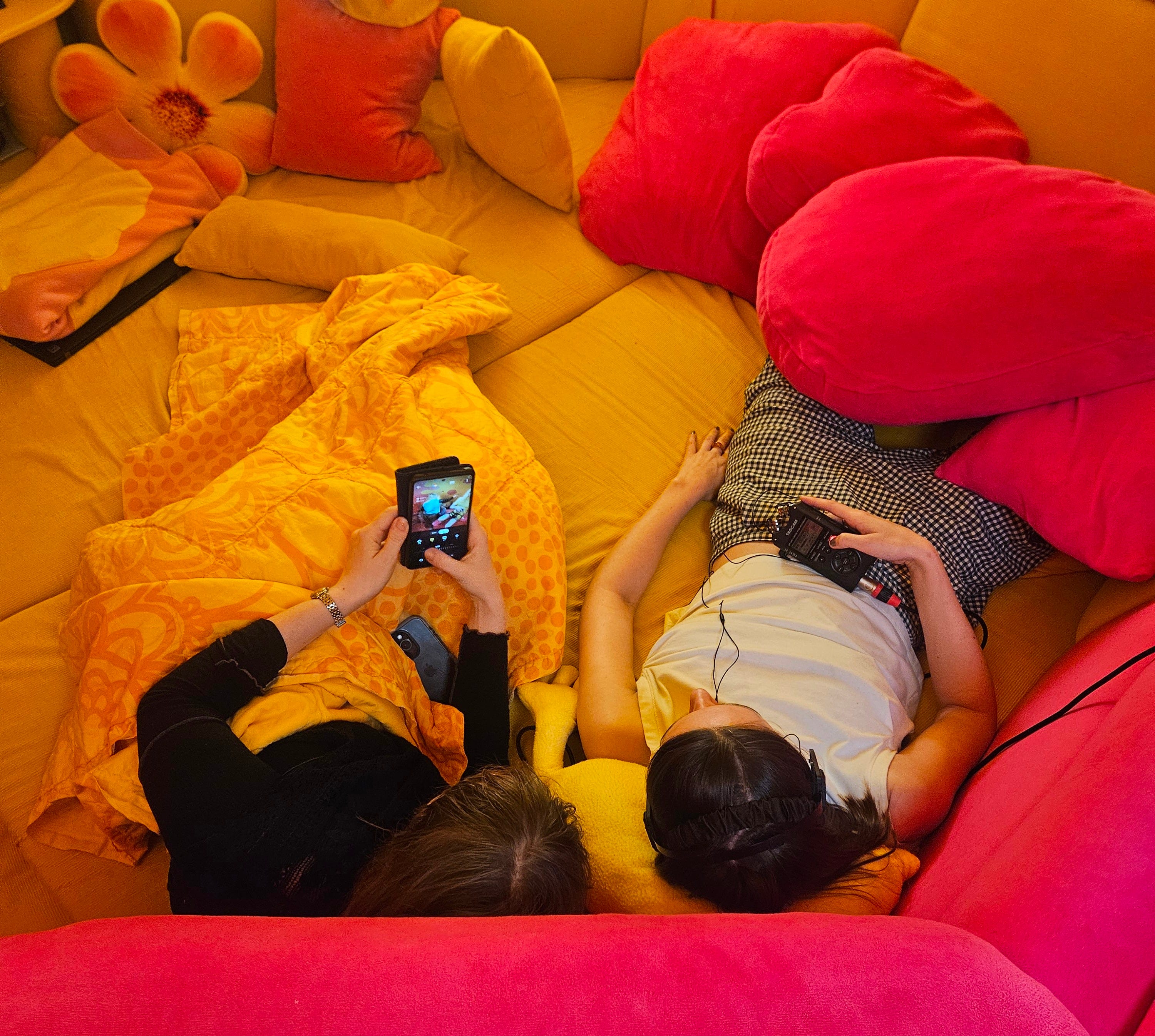
Holding the tensions
We have taken risks and held tensions. We have put ourselves in situations demanding we build critical muscles. What have we gained? Community, joy, knowledge both general and specific, and a prototype of an XR drag show that communicates all of these things at once. Some of those tensions have found their way into this text, written across fragmented schedules, in the margins of freelance artist lives that do not easily accommodate sustained thought. Focus and fragmentation have been as much a condition of this writing as a theme within it. We have cared for children: our own and other’s, and nursed the shoulder tension that accumulates from too many hours at screens, trying to think carefully about bodies while our own protest.
To massage a tension is not to resolve it. It is to keep it workable, to stay in relation to it rather than collapse it prematurely into a conclusion. That, perhaps, is also what it means to hold the tension between community and capital: not to pretend it dissolves, but to keep moving within it, with some degree of intention and some degree of pleasure.
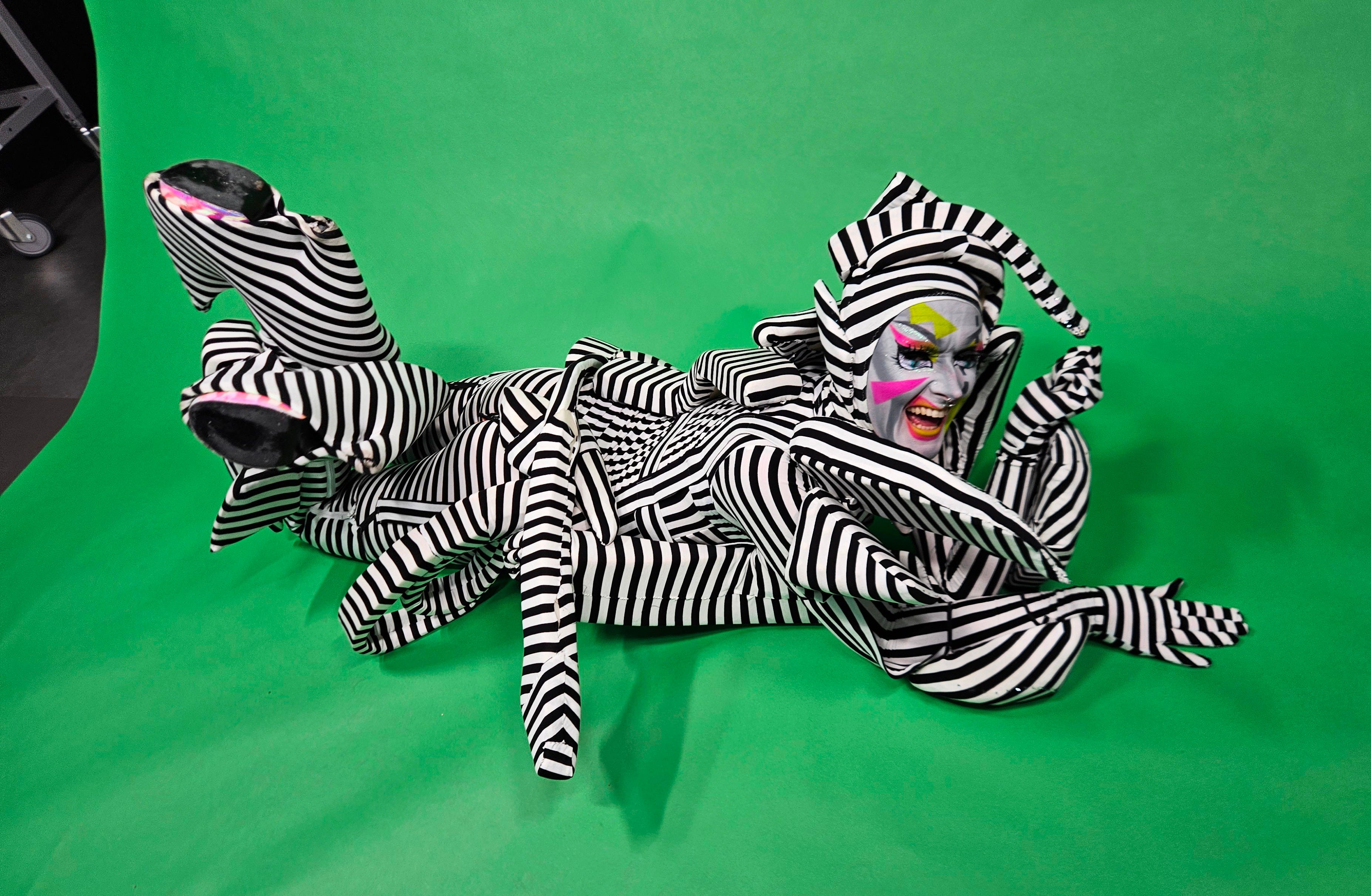
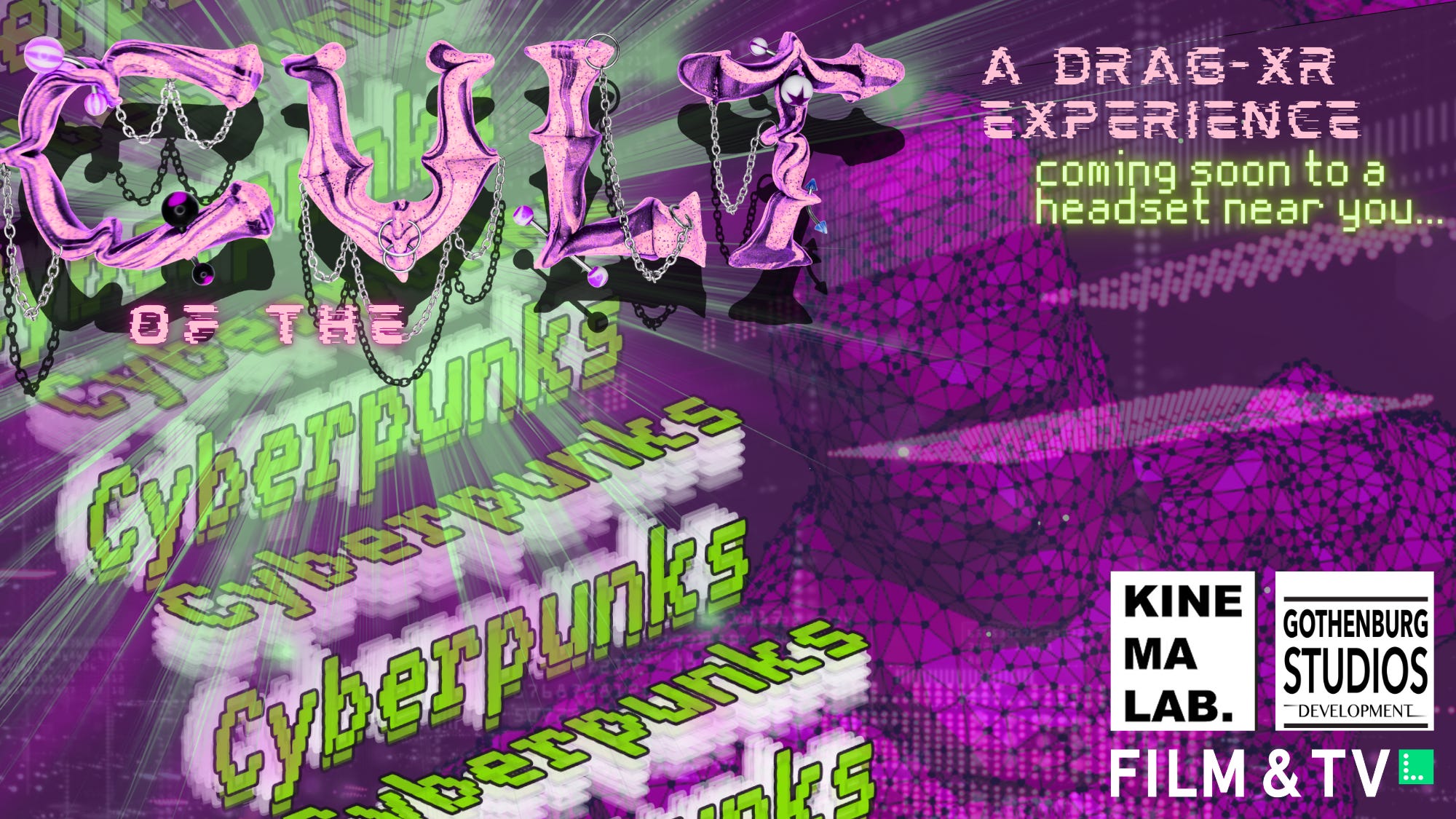
CULT of the Cyberpunks: Exploring drag performance in XR is available on Status Queer’s YouTube channel as a public playlist. 360 videos can be experienced on any device (VR headset, computer or smartphone). We recommend using headphones and selecting maximum quality settings.
Source list:
Bailenson, Jeremy N., and Molly Lesher. “Virtual Reality and its Opportunities and Risks.” In OECD Digital Economy Outlook 2024 (Volume 1): Embracing the Technology Frontier. OECD Publishing, Paris, 2024. https://doi.org/10.1787/a1689dc5-en.
Brown, Adrienne Maree. Pleasure Activism: The Politics of Feeling Good. AK Press, 2019.
Sedgwick, Eve Kosofsky. Touching Feeling: Affect Theory and Cultural Studies. Duke University Press, 2003.
Status Queer. Accessed May 15, 2026. https://www.statusqueer.se/
Zuckerberg, Mark. “Founder’s Letter 2021.” Meta. Accessed May 15, 2026. https://www.meta.com/