
This article was first published in 2025 on LinkedIn. This Substack version is a 2026 revision.
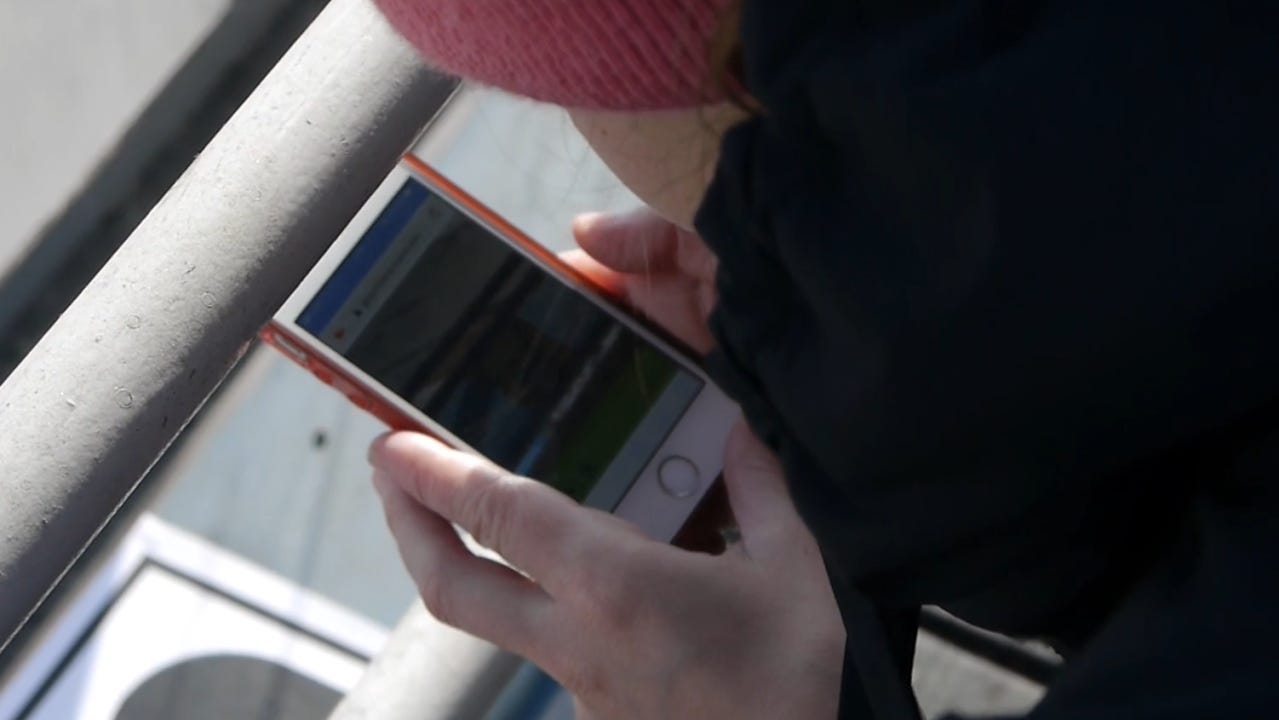
Art, Technology and Society
Contemporary art has always been at the forefront of technological innovation. Artists have been pioneers of new techniques in photo, video, and sound through their creative experimentation, especially over the course of the last century. Many examples of this can be found in artistic movements such as Dada (1920s), Fluxus (1960s) and Net Art (1990s). Their common goal is to test the latent possibilities and limitations of emergent technologies when used as instruments for art making.
The mass-scale adoption of new technologies has been experienced by the art world and society at large as both crisis and catalyst. The invention of the printing press, the camera, then later mass media and industrialised manufacturing presented a crisis of identity and of the image. But they also opened the door to new artistic movements and mediums such as impressionism, photography as an art form, video art, abstract expressionism, performance and pop art.
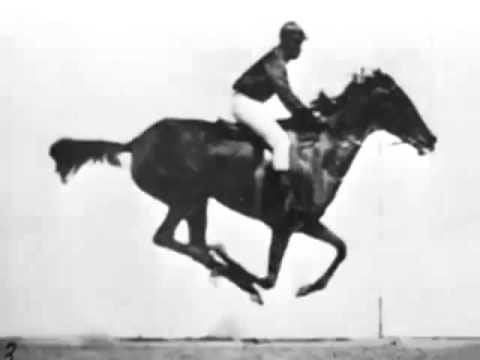
In a recent talk at Inter Arts Center Malmö, Fredrik Trella - researcher and developer in interaction design at Research Institutes of Sweden (RISE) - described how the current state of XR is akin to the nascent state of the film industry in the 1920s: not yet institutionalised or adopted at-scale, but full of creative potential. Rather than translating or representing already existing art forms to a virtual medium, I believe the task of artists now in the 2020s is to pioneer the creative use of these technologies through their curiosity and willingness to take risks.
This report provides some recent examples of XR artworks and artistic initiatives from the Scandinavian region that I believe are taking on this task. I have chosen to focus primarily on XR works that I have experienced in person in order to provide a more in-depth analysis of their inner workings. This is followed by examples of the current limitations and some predictions for future scenarios within this field in the coming 3-5 years (2029-2032).
Current state: Examples from Scandinavia
What is XR contemporary art like? To answer this we need to think beyond the purely visual elements of art. It is playful, philosophical, and like a poem its meaning is multi-layered and unfolds over time - perhaps even long after the actual experience of it. What contemporary artists strive towards is a harmony of form and content, to have both substance and style- so the digital is fully embraced and integrated as an artistic material in its own right. XR art is interdisciplinary by nature, often cross-pollinating with cultural heritage, choreography, interaction design, game design, animation, documentary film, immersive theatre and other fields.
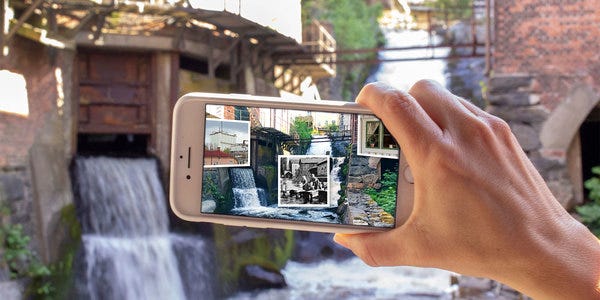
In her work ENTER Mölndal, Mixed Reality artist and choreographer Marika Hedemyr worked with the local museum of Mölndal to bring the archives out into local public spaces. Using mobile VR, she selected key locations for the viewers to stand and hold their screen in the direction instructed. There, archival photographs appear floating in the air of those same places further back in time. Voiceover narration allows people in these pictures to come to life. These fictionalised characters address the viewer directly, comparing their past living and working conditions to those of the present. Hedemyr’s background in choreography means that she is exceptionally skilled in what we might call the “user flow” of MR art experiences. Every detail, bodily position and movement is choreographed and tested out by the artist in the prototyping phase to make the work intuitive and stylistically consistent.
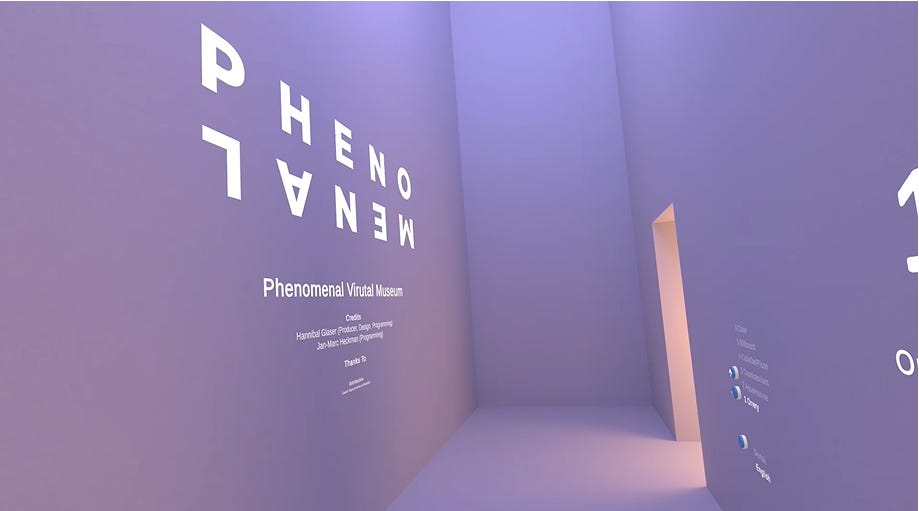
While Hedemyr brings the museum out into the public space, Phenomenal Studios in Viborg Denmark use multi-user VR to create a whole new type of museum experience. Set up in a large open room, the virtual gallery has different exhibitions running in parallel. The visitor selects which one they wish to see by pressing on a virtual button outside the entrance. Visitors can see each other in the space as basic avatars, but the social aspect of multi-user VR is not explored in this context- it is more pragmatic, so they don’t bump into each other. Exhibits become activated by moving closer to them- for example, a video will become more audible as you approach. We may expect to see more of these seemingly empty open spaces with a grid patterned floor in galleries and museums in the coming years, as it’s difficult for people to recreate the experience of large scale exhibitions in the confines of a home-VR setup.
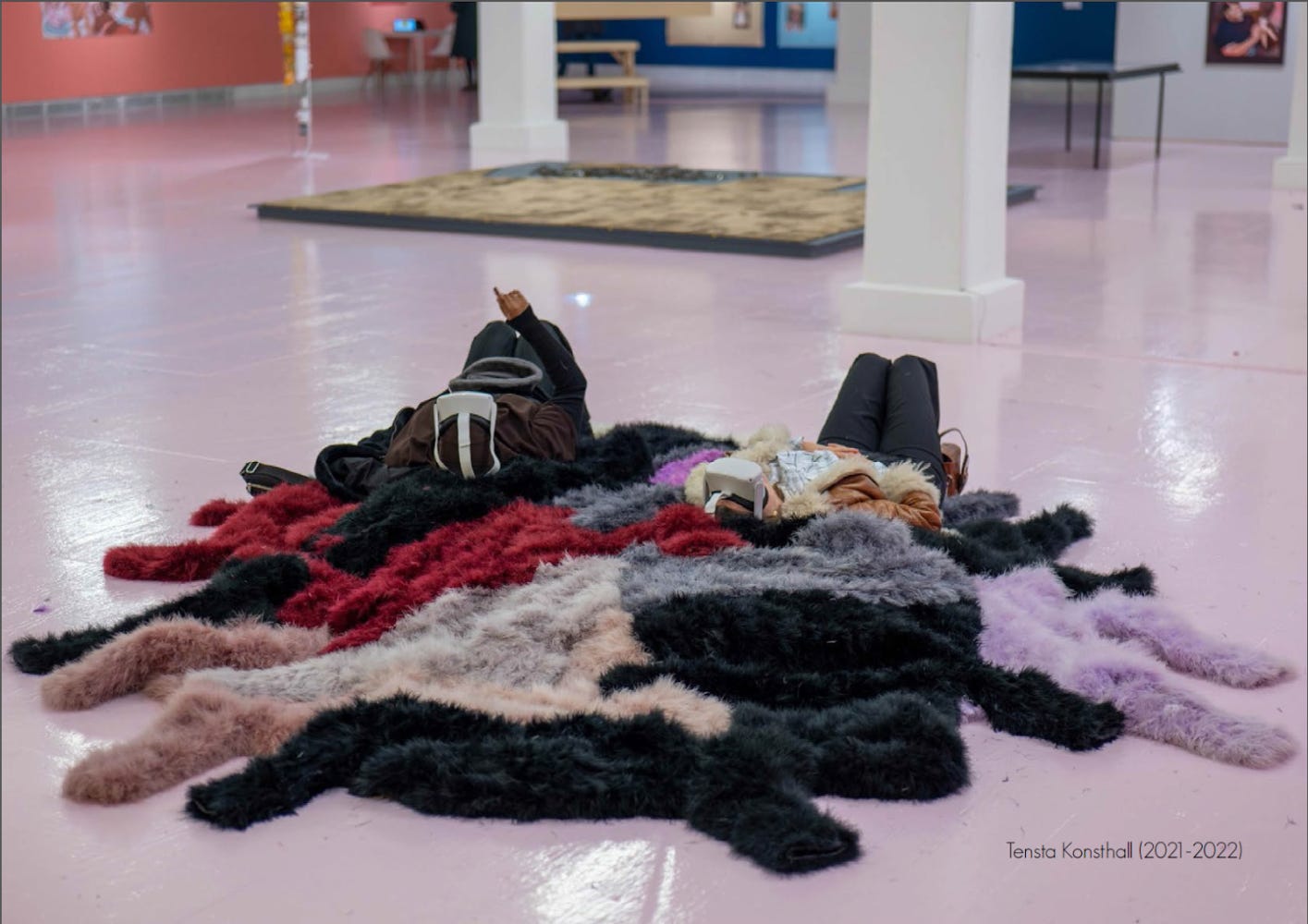
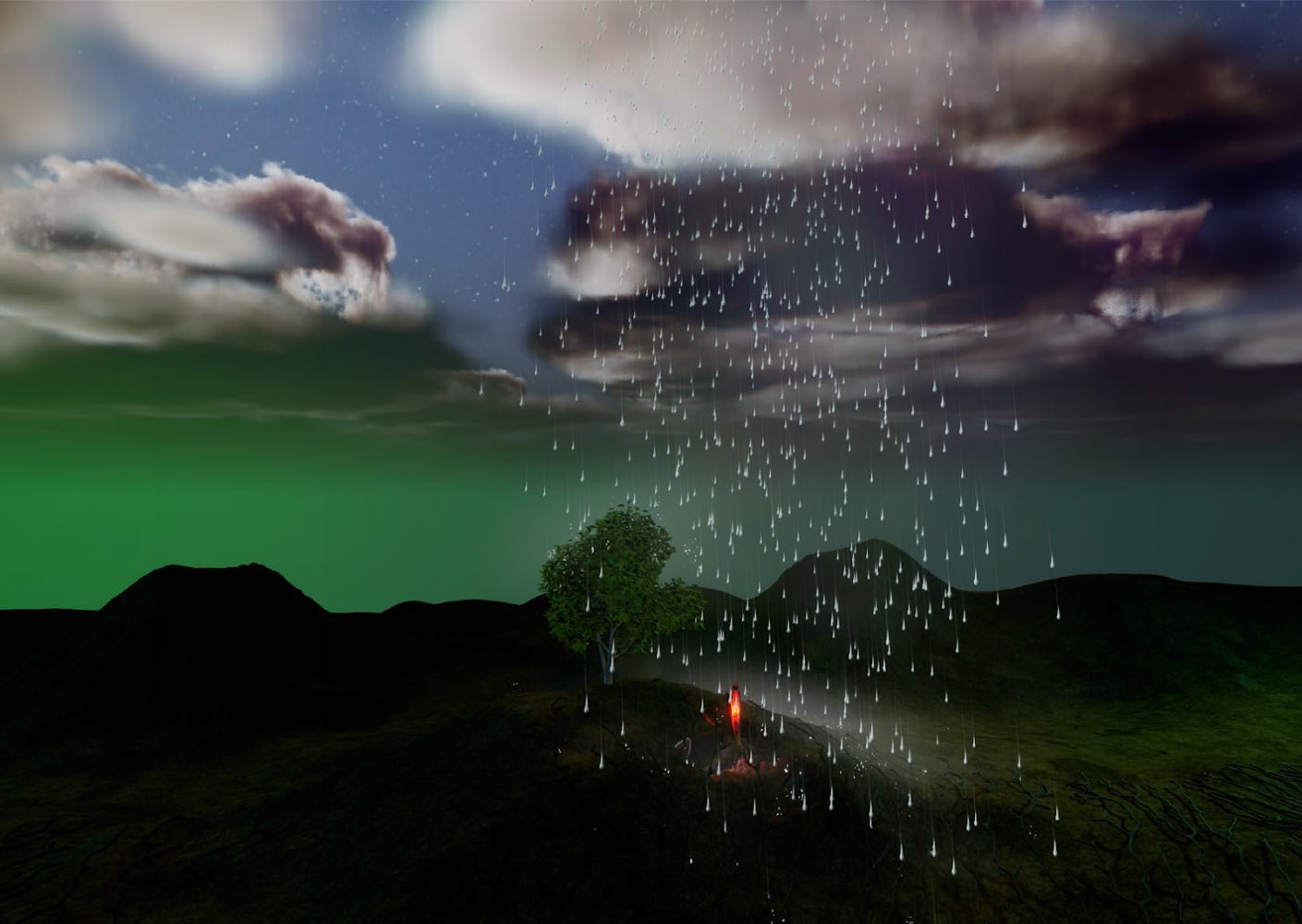
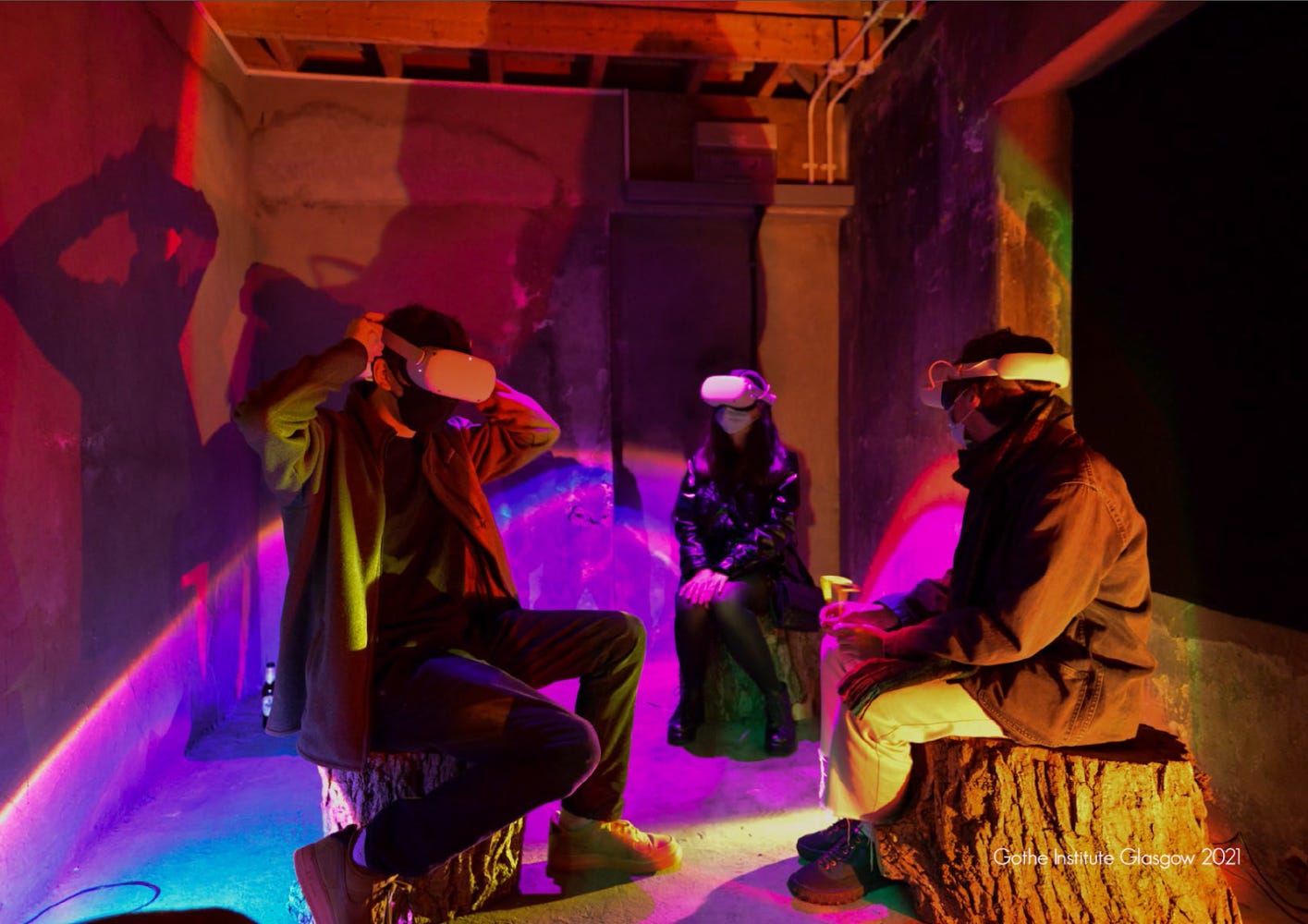
As opposed to providing these empty contextless grid spaces to show XR artworks, the physical scenography is designed to complement the XR experience in recent works by Swedish-Finnish artist Rut Karin Zettergren. She creates sculptural installations using fabrics and light to set the scene for her audience before they enter the VR scene she has created. This careful attention to the continuity of the entire viewing experience is perhaps overlooked by designers of VR experiences in general, but for artists, even fully virtual works need to have a relation to the physical- perhaps meaning they’d be more accurately understood as Mixed Reality.
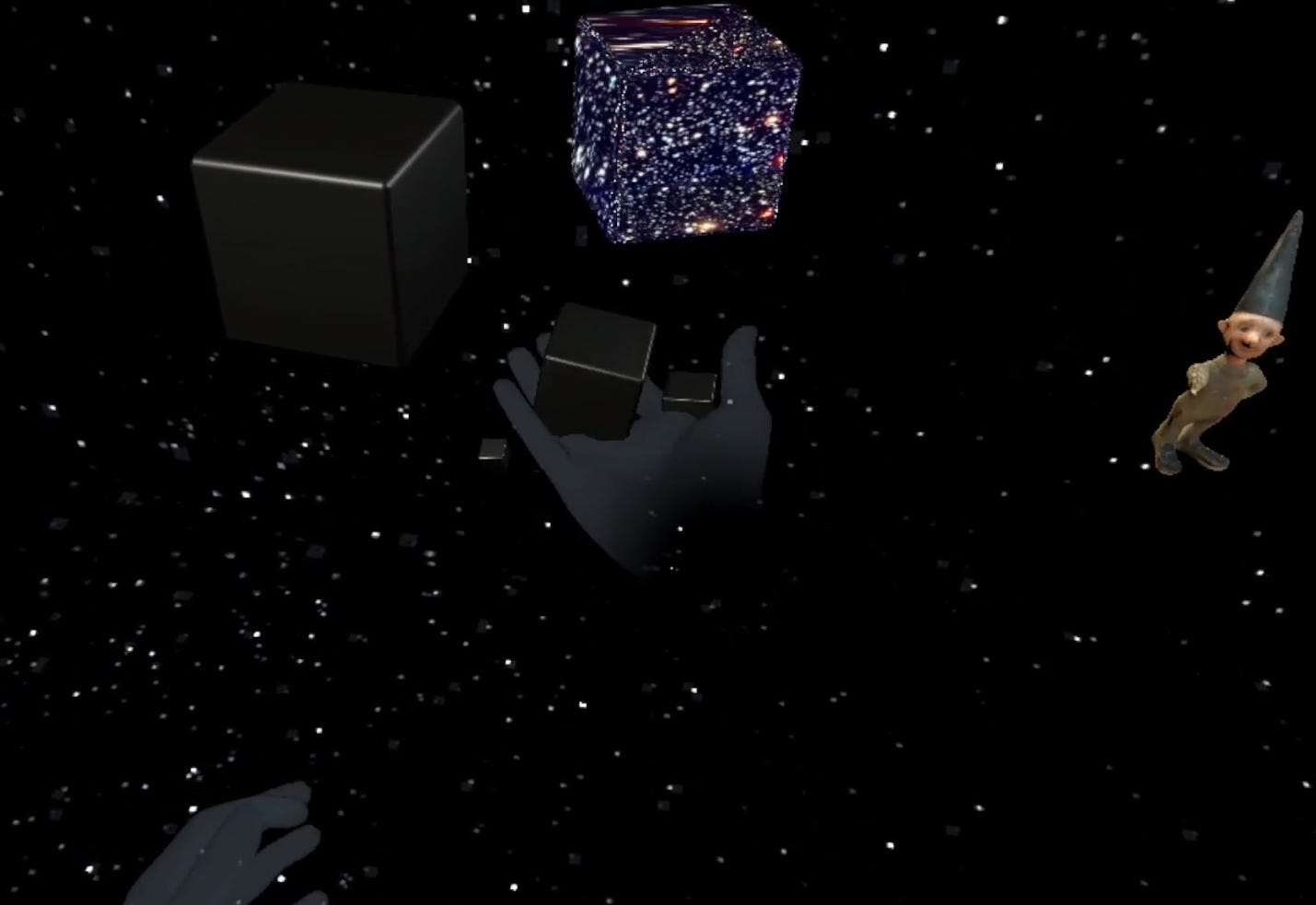
In creating a harmony of form and content, XR art is often playfully self-referential (or we could say “meta” -haha). Francis Patrick Brady is an artist from the UK based in Malmö whose recent VR work “Finding the Real Thing” is reminiscent of John Berger’s seminal book “Ways of Seeing” - a close study of the phenomenon of perception itself. By bringing this fundamental question of how we read and understand the world around us through images to the context of XR art, Brady provides us with some contextual relief from technological overwhelm. We are reminded that these are in fact very old problems with new faces that we will have to continuously search for answers to.
An advantage of using VR with voiceover narration is that it provides an enclosed experience for an individual to be able to focus on. As opposed to video installations, people aren’t interrupting by coming in and out of the space, there are no audio distractions, no phone notifications popping up. Instead our attention is given a resting place: it’s an invitation to slow down and tune in. These kinds of works have a sense of intimacy that is difficult to achieve in other artistic mediums.
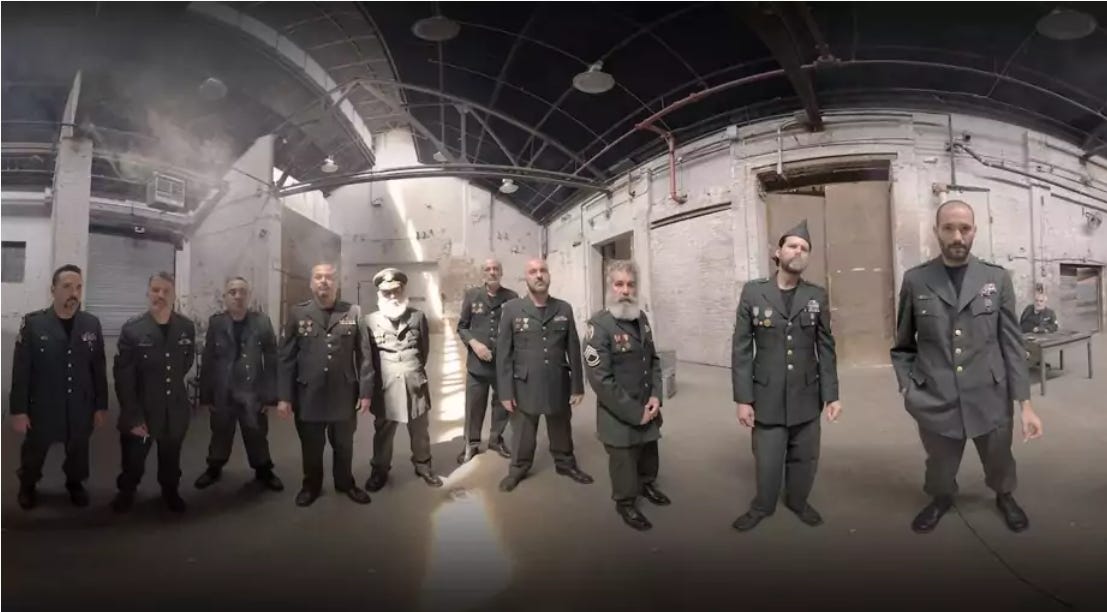
Another example of the intimate effect of VR artwork can be found in Shirin Neshat’s recent VR work and accompanying short film The Fury (shown at Viborg Kunsthal, 2023). Neshat doesn’t use any dialogue in this work, only sound and music accompany the viewer in a 360 warehouse scene. The VR perspective slips in and out of embodying a young Iranian woman who is being held captive and forced to dance naked in front of a group of intimidating male officers who surround her in a circle. Placing the viewer in this first person perspective is an emotionally powerful technique. It is a memorable method of storytelling that puts you at the heart of the narrative to create a deeply embodied understanding that goes beyond language.
Current limitations
Despite these promising examples, the widespread adoption of XR in the field of contemporary art still feels a long way off. A major obstacle is that institutional and market values are resistant to the non-object format of digital media art. This is not just about the difficulty in giving an XR work a commodity value, but also due to traditional ideas about the art object’s “authenticity”, or what philosopher and cultural critic Walter Benjamin terms “aura” in his classic 1935 essay The work of art in the age of mechanical reproduction (again, old problems with new faces).
Secondly, we face a huge lack of accessibility of XR equipment and knowledge. While this is especially true for artists from under-developed countries, even artists from the affluent West often struggle to meet their basic living costs and are therefore unlikely to have access to high end XR equipment. Public arts funding has been in decline for many years and is therefore unlikely to sponsor innovation in this medium. Art schools are generally not equipped with XR facilities or the specialised knowledge needed to train others to use them. I was recently told by a peer from the field of game design that there are “lots of game designers making artistic games but not many artists making artistic games”. Like game design, XR simply isn’t yet a part of the mainstream artistic vocabulary.
Speculative Scenarios (2029-2032)
As the tools and techniques become more accessible to more people, over time we can expect to see highly experimental and imaginative works that explore the technical and experiential possibilities of XR. Artists like to use technologies in the “wrong” way, employing the “glitch” as a site of exploration rather than as a fault. For example, in VR immersive theatre there is a breakdown of the separation between audience member and performer in a multi-user live show: everyone is “on stage” at once. We can expect to see meaningful contributions from the practices of drag, dance, LARP and theatre in this world of avatarial identity play. Whatsmore, remote collaboration between artists across geographies may lead to more cross cultural production for those who do have access to XR equipment.
XR art will be accessed both inside and outside of the museum - in streets and homes. Art schools, festivals and galleries will need to create dedicated facilities and conduct relevant training for the production and presentation of XR formats. We may even see a revival of the 90’s internet café, but this time for XR: dedicated spaces to create and test out this new medium. Other analogies could be an XR arcade or cinema, but as these are focused on consumption rather than production, XR cafes could instead be modelled on the multipurpose artist-run space: combined studio and gallery spaces made by and for the producers themselves to create, test and publicly share their work.
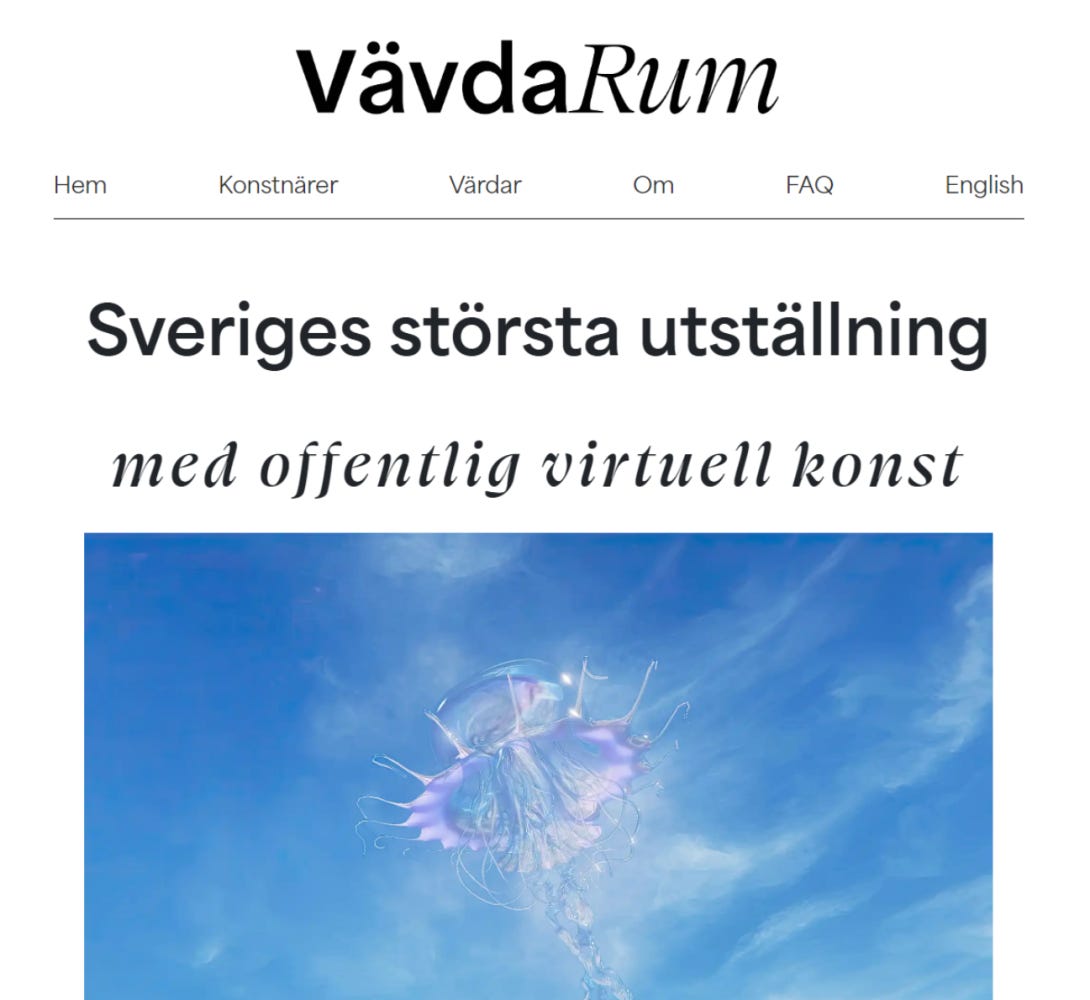
Here in Scandinavia we already have several dedicated initiatives that help produce and share XR contemporary art. Examples include Khora Contemporary (based in Copenhagen), who worked with Neshat to produce The Fury, Untold Garden, who have worked with both Hedemyr and Zettergren, and Vävda Rum, “Sweden’s biggest exhibition of public virtual art” that featured 10 artists and ran for 5 months in 2023 in selected public spaces across the country.
In the Swedish context, there is far more funding for scientific rather than artistic research. So we may see more art/science partnerships in the field of XR art to make them financially feasible. This trend towards interdisciplinarity is not just for pragmatic reasons though- it’s key to unlocking the potentials of XR. We may be in the midst of a reunion of art, philosophy and science after many years of artificially imposed disciplinary separation. As the pioneering 1960s Fluxus artist Allan Kaprow saw it: “Context rather than category, flow rather than work of art”.
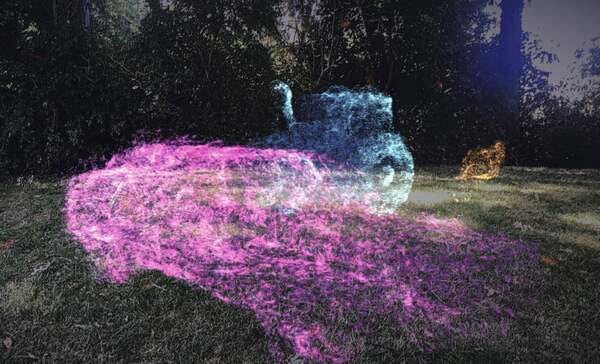
AI and other continual technical advances will make creating in XR even more accessible. For example, a recent innovation in 3D volume rendering called ‘Gaussian Splatting’ allows for the quick and efficient generation of photorealistic 3D models of real-world objects, buildings, and even entire urban streetscapes. This can be done for free using footage captured on a mobile phone using apps like Polycam and Scaniverse, and Hyperscape capture on Meta Quest VR headsets. The captured photographic spatial data is then processed by AI algorithms to generate 3D point clouds, each one made up of “Gaussian splats”: 3D representations of individual points that are distributed across an object or scene to create smooth, continuous surfaces.
To borrow an analogy from art history, photogrammetry is a bit like Cubism (sharp, hard defined edges up close but can be blocky and abstract looking from a distance), while Gaussian splatting is more like Impressionism: the individual point clouds can look blurry and dream-like up close, perhaps containing some rogue “artifacts“ (extra shapes/colours), but from just a short distance away the look is extremely realistic. Gaussian Splatting is a highly efficient solution to the problem of the time and high volume of data needed to otherwise create such detailed and large 3D renders. This innovation could enable more people to create interconnected 3D worlds based on self-made scans of their real-world surroundings, opening up new creative possibilities for artists, game designers and hobbyists alike.
Conclusion
Contemporary art is a way to distil and reflect on the human experience of the present moment. Just as we have developed a cinematic language of image and time, the use of XR in this field will lead to the creation of new languages and grammar for designing spatial and embodied experiences. While contemporary artists may lack agency in the financial sense, they possess an abundance of “soft power” through their practices of speculative worldbuilding, visionary “pro-topias” and “Solarpunk” futures that can absolutely be applied to creative XR projects. Perhaps this is just the antidote to our current dystopian and risk-averse malaise. “Hard” power can only get you so far: whoever is able to seize the means of collective imagination holds the real power.
Source list
In order of appearance:
Amy Boulton & Connie Nyugen Gothenburg Underground Tour
Eadweard Muybridge https://sv.wikipedia.org/wiki/Eadweard_Muybridge
Marika Hedemyr https://www.marikahedemyr.com/
Phenomenal Studios https://www.phenomenalviborg.com/
Rut Karin Zettergren https://www.rutkarinzettergren.se/Portfolio%202024_%20RKZ.pdf
Francis Patrick Brady https://francispatrickbrady.com/Finding-the-Real-Thing
Khora Contemporary https://khoracontemporary.com/project/shirin-neshat/
Untold Garden https://www.untold.garden/
Walter Benjamin https://web.mit.edu/allanmc/www/benjamin.pdf
Allan Kaprow https://www.goodreads.com/book/show/2022630
Vävda rum https://vavdarum.se/